
Why Cotton Hair Ties Break: Causes and Fixes
· Editorial Team

Table of Contents
- Why Cotton Hair Ties Break: The Core Reasons
- Elastic Core Failure
- Hair Breakage from Elastics: How Tension and Friction Damage Hair
- Why Traditional Cotton Ties Rot and Lose Elasticity
- Material Degradation Science: What Happens Inside a Cotton Hair Tie
- How to Prevent Hair Tie Dents and Breakage: A Step-by-Step Guide
- Organic Hair Care: Maintaining and Cleaning Your Hair Ties
- DIY Repair and Repurposing for Worn Cotton Ties
- Frequently Asked Questions
Last Updated: October 4, 2026
Why Cotton Hair Ties Break: The Core Reasons
Cotton hair ties break because the elastic core snaps or the cotton cover wears through. Two parts fail, and they fail for different reasons. This guide from The Pretty Pretties explains why cotton hair ties break, how to spot the warning signs, and what to use instead. Most people blame their hair. The tie is usually the problem.
A cotton hair tie is a fabric-covered elastic band designed to hold hair in place. The cotton wrap protects the elastic inside and grips the hair. When either layer gives out, the tie is done.
Here is the short version:
- The elastic core loses stretch and snaps
- The cotton cover thins, frays, and tears
- Heat, water, and hair products speed up both problems
Below, we break down each failure point and show you how to make any tie last longer.
Elastic Core Failure
The elastic core is the rubber band inside the cotton wrap. It does the actual work of holding your hair. When it stretches too far, too often, it stops springing back.
Elastic has a limit. Stretch it past that limit and the rubber molecules slide out of place. The band goes limp. Then it snaps. This is called hair tie fatigue, and every elastic band hits it eventually.
A few things speed up elastic failure:
- Stretching the tie around thick hair every day
- Leaving it stretched on your wrist for hours
- Washing it with hot water
- Drying it in direct sun or a hot dryer
You can slow this down. Rotate between several ties so each one rests. Never store a tie stretched around a doorknob or bottle. And when a tie starts feeling loose, retire it before it snaps mid-ponytail.
Hair Breakage from Elastics: How Tension and Friction Damage Hair
Hair breakage from elastics comes down to two forces: tension and friction. Tension pulls the hair tight. Friction rubs the strands against the fabric. Together, they weaken the hair cuticle over time.
The hair cuticle is the outer layer of each strand. Think of it like shingles on a roof. When the shingles stay flat, hair looks smooth and strong.
Tension does the most damage. A tight ponytail pulls at the hair follicles, the tiny sacs where hair grows. Pull hard enough, often enough, and the follicle gets stressed. This is how ponytail damage starts.
Friction adds to the problem. Cotton has a rough surface. Every time you tie or adjust your hair, the cotton rubs against the cuticle.
Wet Hair Vulnerability
Wet hair breaks far more easily than dry hair. Water swells the hair shaft and lifts the cuticle. In that state, hair loses elasticity, meaning it stretches instead of bouncing back.
Tying wet hair with a tight cotton band is a common mistake. The band grips hard. The swollen strands are weak. One sharp pull and the hair snaps.
Wait until hair is mostly dry before tying it up. If you must tie wet hair, use a loose hold and a soft fabric tie.
Signs of Follicle Stress
Your scalp gives you warnings before real damage sets in. Watch for these signs of follicle stress:
- A tender or sore scalp after wearing a ponytail
- Small bumps or pimples along the hairline
- Thinning patches near the temples
- Broken hairs two to three inches long
- A headache that fades when you let your hair down
If you notice these, give your hair a break. Wear it loose for a few days. Switch to a gentler tie.
Why Traditional Cotton Ties Rot and Lose Elasticity
Traditional cotton ties rot because cotton is a cellulose fiber that absorbs and holds water. That trapped moisture attacks both layers of the tie at once: the cotton wrap and the rubber core inside it.
Cotton's cellulose structure is the root cause. Cellulose molecules are packed with hydroxyl groups, and those groups bond with water molecules.
The elastic core suffers on a different timeline. Most covered elastics use natural rubber or a rubber-blend core. Water and heat break the sulfur cross-links that give rubber its snap.
Synthetic fibers behave differently. Polyester and nylon are hydrophobic, so they shed water instead of soaking it and dry faster.
You can slow rot with three habits:
- Never store ties in a damp bathroom or gym bag
- Let ties dry fully before wearing them again
- Replace any tie that smells musty or shows dark spots, because the fiber is already compromised
A tie with a frayed cover is a tie on its last legs. Once the cotton weave opens up, the core is exposed to air and water, and oxidation finishes the job within weeks.
Material Degradation Science: What Happens Inside a Cotton Hair Tie
Material degradation is the slow breakdown of a material's structure through water, heat, light, and friction. Inside a cotton tie, this happens at the fiber level, and it is invisible until the tie fails.
Here is the chain of events:
- Cotton fibers absorb sweat and moisture
- The fibers swell and the weave loosens
- Friction rubs the loosened fibers away
- The elastic core is exposed to air and water
- The rubber oxidizes and loses its spring
- The tie snaps or sheds its cover
Oxidation is the key step. Oxygen reacts with the rubber and makes it brittle. Heat and sunlight speed up the reaction. That is why a tie left on a sunny windowsill dies fast.
The lesson is simple. Keep ties dry, keep them out of harsh heat, and replace them before the cover wears thin. A tie with a frayed cover is a tie on its last legs.
How to Prevent Hair Tie Dents and Breakage: A Step-by-Step Guide
You can prevent most hair tie damage with better habits and better materials. The right tie and the right technique protect your hair and keep your ties alive longer.
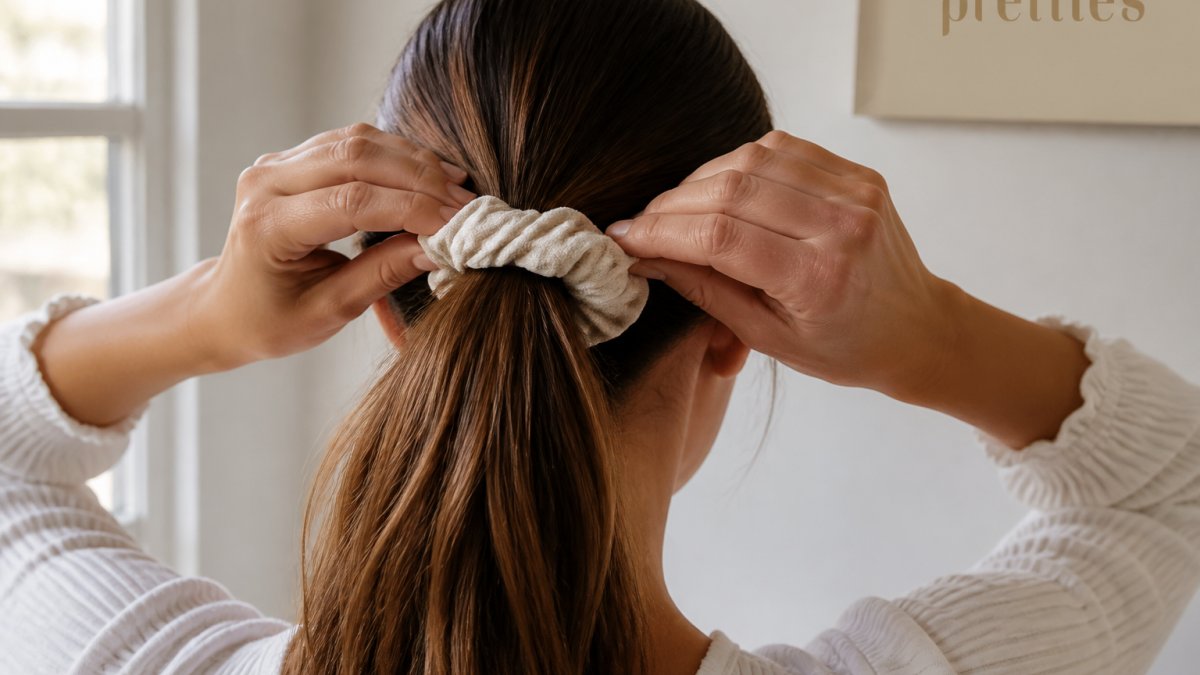
Choosing the Right Hair Tie Material
Material matters more than anything else. A soft, smooth tie causes less friction than a rough cotton band. Look for covered elastics made from modal silk, satin, or smooth cotton blends.
Modal silk is a smart pick. It is smooth, breathable, and gentle on the cuticle. It also holds a firm grip without needing a tight wrap. The Pretty Pretties makes hand-dyed ties from modal silk and cotton, and their smooth surface cuts down on friction and dents.
Avoid bare rubber bands. They grab hair and tear it on removal. Also skip metal clasps, which snag and rust.
Proper Application Technique
Good technique protects your hair as much as the tie itself. Follow these steps:
- Gather hair loosely with your hands, not a brush
- Wrap the tie once around the base
- Wrap a second time only if needed for hold
- Stop before the tie feels tight on your scalp
- Slide the tie out gently instead of pulling it down
A loose hold still works. If your hair slips, step up to a stronger tie rather than wrapping tighter.
Organic Hair Care: Maintaining and Cleaning Your Hair Ties
Organic hair care includes how you treat your ties, not just your hair. Clean ties grip better, last longer, and transfer less oil and product buildup back onto your scalp.
Wash your ties every one to two weeks, or after any heavy sweat session. Here is a fiber-safe routine:
- Fill a bowl with cool water and a drop of gentle, pH-neutral soap
- Add the ties and soak for three to five minutes
- Squeeze them gently, never wring, which stretches the elastic core
- Rinse in cool water until the water runs clear
- Lay flat to air dry, away from direct sun and radiators
Cool water protects the elastic. Hot water weakens the rubber cross-links and shrinks cotton. Air drying protects the fabric. A hot dryer bakes the rubber and can crack the cotton weave.
Storage matters as much as washing. Rotate three to five ties so each one rests between wears, and store them loose in a small pouch, dish, or drawer divider.
A few trade-offs to know:
- Modal silk and satin ties dry faster than plain cotton and resist odor better
- Cotton ties need more frequent washing because the fiber holds moisture longer
- Ties worn on the wrist collect lotion and sunscreen, so wash those more often
If a tie still smells musty after washing, the bacteria have moved into the fiber structure. Retire it. No amount of soap will bring it back.
DIY Repair and Repurposing for Worn Cotton Ties
Worn cotton ties do not have to go in the trash. A few simple fixes can extend their life, and old ties can serve new purposes.
Try these repairs first:
- Trim loose threads with small scissors to stop fraying
- Re-stitch a split seam with a needle and matching thread
- Replace a dead elastic by threading new elastic through the cotton tube
- Tighten a loose cover by hand-sewing the ends closed
When a tie is truly done, repurpose it:
- Use it to bundle charging cables
- Wrap it around a rolled yoga mat
- Tie up a small gift or gift basket
- Mark a plant stake in the garden
Repurposing keeps fabric out of landfills. It also fits a zero-waste mindset, which aligns with our own production practices.
Frequently Asked Questions
Why are my hair ties breaking?
Cotton hair ties break because the elastic core loses its stretch over time, and the cotton cover wears thin from friction and moisture. When you stretch a cotton tie, the elastic inside absorbs the tension, but repeated use causes it to fatigue and snap. The cotton outer layer also frays, exposing the elastic to further damage. Choosing ties with durable materials like modal silk can prevent this.
Why do cotton hair ties lose their elasticity so quickly?
Cotton fibers absorb moisture from sweat, humidity, and washing, which weakens the elastic core. Unlike synthetic materials, cotton doesn't repel water, so the elastic inside stays damp and degrades faster. Additionally, the cotton cover creates friction against hair, causing the elastic to stretch beyond its limit. Switching to biodegradable silk or modal ties can offer better longevity.
Does the material of a hair tie affect hair breakage?
Yes, the material significantly impacts hair breakage. Cotton hair ties create friction that roughens the hair cuticle, leading to split ends and snapping. Elastic bands with metal joins can catch and tear hair. Silk or modal scrunchies reduce friction and distribute tension evenly, preventing dents and breakage. For delicate hair, organic hair care practices include using gentle, non-abrasive ties.
Are biodegradable hair ties more prone to snapping?
Biodegradable hair ties made from natural fibers like cotton or silk can snap if not constructed well. However, quality biodegradable ties often use strong elastic cores covered in soft fabric. The key is the elastic quality and how the cover is attached. Well-made biodegradable ties from brands like The Pretty Pretties are durable and designed to hold firmly without damaging hair.
Your hair does not need to pay for a tight hold. The right tie protects your strands, holds firm, and turns a rushed ponytail into a small moment of calm. At The Pretty Pretties, our hand-dyed ties are made from modal silk and cotton, infused with essential oils that release a natural aroma for up to a year. They are biodegradable, ethically made by women-led teams, and gentle on every hair type. Get started with The Pretty Pretties and give your hair a tie that treats it well.