
How to Prevent Hair Breakage From Ties: 7 Steps That Work
· Editorial Team

Table of Contents
- What You'll Need Before You Start
- Can Hair Ties Cause Hair Breakage? What the Evidence Shows
- Step 1: Choose the Best Hair Ties for Preventing Breakage
- Step 2: Learn How to Wear a Ponytail Without Damage
- Step 3: Master Gentle Removal Techniques
- Step 4: Adjust Your Routine for Hair Texture and Density
- Step 5: Build a Nighttime and Environmental Protection Routine
- Step 6: Repair Existing Breakage and Track Progress
- Frequently Asked Questions
Last Updated: September 16, 2026
What You'll Need Before You Start
You don't need a cabinet full of products to stop tie-related damage, just the right accessories and a few technique changes. Gather:
- Gentle hair ties made from silk, satin, or soft fabric-covered elastic
- A wide-tooth comb for detangling without snapping strands
- Leave-in conditioner or a light serum for slip and hydration
- A silk or satin pillowcase to reduce overnight friction
- A small pair of scissors for trimming split ends as they appear
Can Hair Ties Cause Hair Breakage? What the Evidence Shows
Yes. Hair ties are one of the most common causes of mechanical damage.
How Tension, Friction, and Elasticity Interact
Hair elasticity is a strand's ability to stretch and return to shape. Hair under constant tension loses that recovery ability and stays weakened even after you remove the tie. Friction compounds it: elastic bands create drag every time you tighten or slide out a tie, roughening the cuticle and causing snags and split ends.
Signs of Mechanical Damage to Watch For
- Ponytail dents that stay visible after you remove the tie
- Short broken strands around the crown or temples
- Split ends appearing higher up the shaft, not just at the tips
- Increased shedding when you comb or wash
- Rough, dull texture near where you tie your hair most often
If two or more sound familiar, your styling habits are the likely culprit.
Step 1: Choose the Best Hair Ties for Preventing Breakage
The highest-impact change is your tie material. A soft, wide fabric tie spreads tension across a larger area instead of concentrating it on one thin band.
Materials Ranked by Gentleness
Material |
Grip |
Damage Risk |
Best For |
|---|---|---|---|
Silk or satin scrunchie |
Moderate |
Lowest |
Fine, delicate, or fragile hair |
Modal silk and cotton blend |
Firm |
Low |
All textures, including thick and curly |
Fabric-covered elastic |
Firm |
Low |
Active use and workouts |
Coated metal-free band |
Firm |
Moderate |
Short-term styling only |
Thin elastic band |
Very firm |
Highest |
Avoid for daily wear |
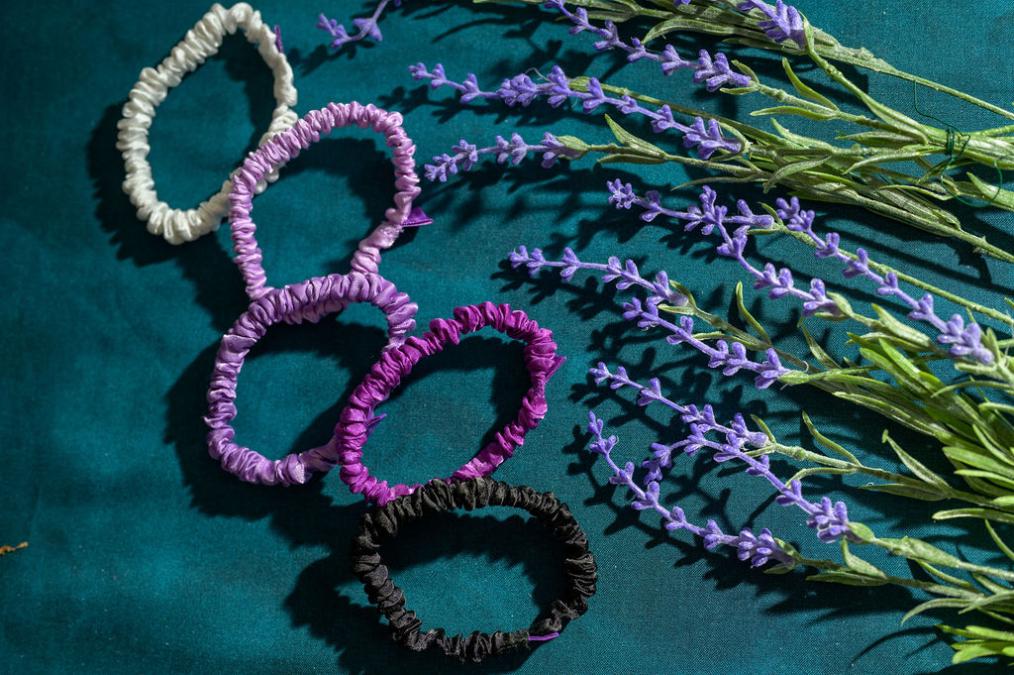
A close-up still life of several soft fabric hair ties in lavender, white, and black
Types of Hair Ties to Avoid
Rubber bands are the worst offender: they grip hard, don't stretch with movement, and snap strands on removal. Thin elastic bands with metal crimps are nearly as bad, since the metal join catches and tears hair. Skip anything with exposed metal, sharp edges, or a hold that needs more than three wraps.
Step 2: Learn How to Wear a Ponytail Without Damage
A damage-free ponytail comes down to placement and tension, not the tie alone. Move the position daily so the same strands aren't always bearing the load.
Ponytail Placement and Density Adjustments
- High ponytails pull hardest on the hairline and temples. Wear them occasionally, not daily.
- Mid ponytails at the back of the head distribute tension most evenly.
- Low ponytails at the nape reduce pull on the scalp but can rub against collars, which adds friction.
- For thick or dense hair, split the hair into two sections and tie each one before combining, or use a wider tie that can wrap twice without over-tightening.
- For fine hair, use a smaller tie and avoid wrapping more than needed to secure the hold.
The goal is a hold that stays put without compressing the hair shaft. If you can slide two fingers under the tie at the base, the tension is right.
Step 3: Master Gentle Removal Techniques
Most breakage happens during removal, not wear. Pulling a tie out drags hair across the elastic surface, roughening the cuticle exactly where tension already weakened it.
Why Removal Causes More Damage Than Wear
With a tie in place, tension is static, the shaft is stretched but not moving. Removal introduces dynamic friction: the tie slides against the hair, and every strand in its grip is pulled two ways at once, stretching past its elastic limit or snapping. Make the tie release gradually, not all at once.
The Slide-and-Unwrap Method
This works for any tie, especially firmly gripping fabric-covered elastics:
- Stabilize the base. Hold the ponytail with one hand just below the tie so the hair doesn't pull against the scalp.
- Create slack first. Use your free hand to gently stretch the tie along the length of the hair to break the tension seal.
- Unwrap one loop at a time. Never pull the tie over the ends of your hair. Slide each loop down the length rather than yanking it free.
- Stop at the last wrap. Slide the final loop down to the ends and let it fall. Pulling it over the tips causes the most friction damage because ends are the oldest, weakest part of the strand.
- Add slip if it catches. A drop of leave-in conditioner or a light serum on the tie reduces friction.
Tools That Make Removal Safer
- Seamless fabric ties slide more easily than coated elastic because the fabric surface has lower friction against hair.
- Satin scrunchies are the easiest to remove because the satin weave lets the tie glide rather than grip.
- A wide-tooth comb can gently lift a tangled tie away from the hair rather than pulling it through.
What Not to Do
- Don't pull the tie straight out away from the head. This maximizes the angle of friction and is the single most damaging removal method.
- Don't remove a tie from wet hair unless you absolutely have to. Wet hair stretches further and doesn't snap back, so manageable friction on dry strands can permanently deform wet ones.
- Don't rake the tie out with your fingers. Your fingers create more drag than a smooth tie surface.
Removal After Workouts or Sleep
After sweating, the shaft is slightly swollen and more vulnerable, so let hair cool and dry a few minutes before removing the tie. If you sleep with a tie in, remove it first thing using the slide-and-unwrap method. This is where real damage accumulates, technique matters more than material.
Step 4: Adjust Your Routine for Hair Texture and Density
Texture and porosity change how much tension your strands can take. Fine, low-density hair breaks under less force than thick, coarse hair, so the same ponytail isn't equally safe for everyone.
Fine or Low-Density Hair
Fine hair has a smaller-diameter shaft, so less structural protein resists tension, and fewer cuticle layers mean friction damages it faster.
Pretties Scented Hair Ties | 100% →
- Tie choice: Use silk or satin scrunchies only. Thin elastics concentrate force on a tiny area and will snap fine strands.
- Tension: Keep ponytails loose enough that you can slide two fingers under the tie at the base. If you can't, it's too tight.
- Placement: Avoid high ponytails. The hairline and temples have the finest, most fragile strands, and high placements pull directly on them.
- Wraps: Never wrap more than twice. If the tie needs three wraps to hold, it's too small, size up.
Medium Texture Hair
Medium hair handles moderate tension but isn't invincible; the main risk is cumulative damage from daily styling.
- Tie choice: Fabric-covered elastics and modal silk blends work well. These distribute tension without requiring excessive wraps.
- Tension: A firm hold is fine, but vary placement daily so the same strands aren't bearing the load.
- Placement: Mid ponytails at the back of the head distribute tension most evenly. Alternate with low ponytails and loose braids.
- Wraps: Two to three wraps is typical. If you need four, the tie is too thin.
Thick or Coarse Hair
Thick hair has more mass pulling against the tie, so the challenge is holding that weight without over-tightening.
- Tie choice: Use a wide, firm fabric tie that can wrap twice without compressing the hair shaft. A tie that's too thin will dig in and create dents.
- Tension: Split hair into two sections and tie each one before combining, or use a wider tie that distributes force across a larger area.
- Placement: Low ponytails at the nape reduce pull on the scalp, but watch for friction against collars. High ponytails can work if the tie is wide enough.
- Wraps: Two wraps should be enough with a properly sized tie. If you're wrapping three or four times, you're concentrating force.
Curly or Coily Hair
Curly hair's natural bends create weak points, and tying dry curls tightly can snap them at the bend.
- Tie choice: Satin scrunchies only. The smooth surface reduces friction against the curl pattern.
- Tension: Never tie dry curls tightly. Use a loose pineapple style at night, gather hair on top of the head with a satin scrunchie and let the curls rest loosely.
- Placement: Avoid pulling curls straight back, which distorts the pattern and stresses the bend points.
- Wraps: One or two loose wraps maximum. The goal is to contain the hair, not compress it.
High-Porosity Hair
High-porosity hair has gaps in the cuticle layer, so it loses moisture faster, becomes brittle, and snaps sooner.
- Tie choice: Any gentle fabric tie works, but add leave-in conditioner before styling to increase slip.
- Tension: Keep tension low. High-porosity hair is already structurally compromised.
- Placement: Vary placement daily and avoid styles that pull on the same section repeatedly.
- Wraps: Use a tie that holds with minimal wraps. If you need more than two, your hair is too dry to safely tie.
Density Matters as Much as Texture
Density, strands per square inch, affects how much weight the tie holds. Low-density hair has fewer strands to distribute force, so each bears more tension; high-density hair has more strands but greater total weight, which can pull the tie tighter. Low density calls for smaller, lighter ties and minimal tension; high density calls for wider ties that hold the mass without excessive wraps.
A Simple Test for Your Hair Type
Wrap a fabric tie twice around a small section of hair. A deep dent lasting over an hour means it's too tight; sliding off means it's too loose. The right tension holds securely without leaving a mark.
Step 5: Build a Nighttime and Environmental Protection Routine
Overnight friction does quiet, cumulative damage: cotton pillowcases roughen the cuticle, and loose hair tangles against itself. Switch to a silk or satin pillowcase and tie hair loosely on top of your head, or braid it, before bed.
Step 6: Repair Existing Breakage and Track Progress
You can't fuse a broken strand, but you can stop damage spreading and let new growth catch up. Trim split ends above the split point, left alone, the split travels up the shaft and the strand breaks higher. A dusting every six to eight weeks keeps damage from climbing.
For DIY repair between trims:
- Apply a protein treatment to temporarily fill gaps in the cuticle, then follow with a moisturizing mask.
- Use a leave-in conditioner or serum on ends daily to reduce friction.
- Give hair a break from tight styles for a few weeks to let weak points recover.
Frequently Asked Questions
How do I stop hair ties from breaking my hair?
Switch to fabric-covered ties made from modal silk, satin, or organic cotton, since these create less friction than bare elastic or metal closures. Avoid pulling the tie more than twice around the ponytail; if it needs three wraps to stay put, the band is too tight. Change your ponytail height every day so the same section of hair does not carry the tension repeatedly. Loosen the band slightly before bed or take it out entirely, and never rip it free when removing it.
What is the best way to tie my hair to prevent breakage?
Gather hair loosely with your fingers rather than a brush, position the ponytail at a different height than yesterday, and wrap the tie only as many times as needed for a firm hold. Stop before the band digs into the scalp. If you use a fabric scrunchie, wrap it around the base and tuck the ends instead of knotting. For a tighter hold during workouts, choose a tie tested to stay put during vigorous activity rather than doubling up on thin elastics.
Can tight ponytails cause permanent hair loss?
Repeated high-tension styling can lead to traction-related thinning over time, and in some people the loss becomes long-term if the pulling continues for years. The early warning signs are a tender scalp, small bumps along the hairline, and a ponytail dent that stays visible after you take the tie out. Rotating ponytail placement, using wider fabric ties, and giving hair regular days down reduces the cumulative strain on the follicle.
How do I know if my hair ties are damaging my hair?
Check three things: whether you see short broken hairs around your part or hairline, whether your tie leaves a dent that lasts more than an hour, and whether removal involves any snapping or tugging. If the answer to any of these is yes, the tie or the technique is the problem. Fabric scrunchies with a soft, wide band distribute pressure better than thin elastics and are gentler on the hair shaft during removal.