
Benefits of Modal Silk Fabric: What to Know in 2026
· Editorial Team

Table of Contents
- What Is Modal Silk Fabric and Why It Feels Different
- Modal Silk Fabric Composition: What's Actually in the Weave
- Modal vs Silk: How the Two Fabrics Compare
- The Real Benefits: Softness, Breathability, and Color Retention
- Downsides of Modal Fabric You Should Know Before Buying
- How to Care for Modal Fabric So It Lasts
- Sustainability, Sourcing, and How to Identify Real Modal Silk
- Conclusion
- Frequently Asked Questions
Last Updated: October 9, 2026
What Is Modal Silk Fabric and Why It Feels Different
Modal silk fabric combines modal, a semi-synthetic fiber made from beechwood pulp, with silk or silk-like fibers for a material prized for its smooth texture, softness, and luxurious sheen.
Modal is a regenerated cellulose fiber, like rayon and viscose, but a modified process gives it greater strength and a silkier hand feel.
Below, we break down how modal silk is made, what is actually in the weave, and how it stacks up against real silk.
How Modal Fiber Is Made From Beechwood Pulp
Modal fiber production starts with wood pulp, most often beechwood, broken down chemically and regenerated into cellulose fibers, a process shared with rayon and viscose.
The Federal Trade Commission's textile fiber labeling guidance governs how these fibers must be named and disclosed on US labels, which is why you will see "modal" listed as its own fiber rather than grouped under rayon.
Why "Modal Silk" Is a Blend, Not a Species of Silk
Modal silk is not a type of silk. It pairs modal fiber with silk, cotton, or another fiber to combine modal's softness and durability with silk's sheen and drape. Real silk comes from silkworms; modal comes from wood pulp.
If a product is labeled "modal silk," read the composition tag, the percentage breakdown tells you what you are actually buying.
Modal Silk Fabric Composition: What's Actually in the Weave
Modal silk fabric composition varies by manufacturer, but most blends fall into a few recognizable ratios that determine softness, breathability, durability, and after-wash behavior.
Blend |
Typical Ratio |
What It Changes |
|---|---|---|
Modal-dominant |
70-95% modal, rest silk or cotton |
Maximum softness, lower cost, less sheen |
Balanced |
50% modal, 50% silk |
Noticeable sheen, good drape, moderate care needs |
Silk-dominant |
60%+ silk, rest modal |
Highest luster, most delicate, higher cost |
Modal-cotton |
60% modal, 40% cotton |
Breathable, durable, everyday wear |
Common Fiber Ratios and What They Change
A modal-dominant blend delivers the smooth, silky feel most shoppers associate with the category while staying durable and easy to wash. Balanced blends lean toward silk's appearance but demand gentler care.
For hair ties or delicate accessories, a modal-cotton blend is often the practical pick: it holds up to repeated use, resists pilling, and stays gentle against hair and skin.
Modal vs Silk: How the Two Fabrics Compare
Modal and silk differ in origin, cost, durability, and care. Silk is a natural protein fiber from silkworms; modal is a regenerated cellulose fiber from wood pulp. Silk wins on luster and luxury feel, while modal wins on durability, affordability, and ease of care.
Here is how they stack up on the qualities buyers care about most:
Quality |
Modal |
Silk |
Modal Silk Blend |
|---|---|---|---|
Fiber origin |
Regenerated cellulose from beechwood or other wood pulp |
Natural protein fiber from silkworms |
Depends on ratio; usually modal-dominant |
Feel |
Cool, smooth, uniform |
Warm, fluid, slightly irregular |
Soft with a silk-like glide |
Appearance |
Subtle sheen, matte-to-satin finish |
High luster, natural shimmer |
Moderate sheen, less reflective than pure silk |
Breathability |
Absorbs and releases moisture quickly |
Insulates; can trap heat in humid conditions |
Breathes well if modal-dominant |
Durability |
Resists shrinking and pilling better than silk |
Snags, weakens with harsh washing |
Middle ground; depends on blend ratio |
Color retention |
Holds dye well; resists fading |
Can fade with sun exposure |
Good, especially in modal-dominant blends |
Care |
Machine wash cold, air dry |
Often dry clean or hand wash |
Follow the most delicate fiber in the blend |
Cost |
Generally far less expensive to produce |
Expensive to produce |
Priced between the two |
Why the Blend Ratio Changes Everything
A 50/50 modal-silk blend does not behave like a 90/10 blend. In a modal-dominant blend, you get modal's moisture management, durability, and easy care, with just enough silk to add sheen and drape. In a silk-dominant blend, the fabric feels closer to pure silk: more lustrous, more fluid, and more demanding to care for. If a product says "modal silk" but does not list percentages, treat it as a marketing term rather than a specification.
Silk-Like Fabrics That Are Not Silk
Modal silk is not the only alternative to real silk. Viscose, rayon, cupro, and lyocell can all be finished to mimic silk's drape and sheen. Lyocell, for example, is produced in a closed-loop process that recovers most of the solvent, giving it a different environmental profile than conventional modal. Cupro, made from cotton linter, has a smooth, silk-like hand but is less durable when wet.
A Practical Decision Framework
Choose pure silk for maximum luster if you will hand wash or dry clean and do not mind the higher cost. Choose a modal-dominant blend for a silk-like look with easier care, better durability, and a lower price. For daily accessories like hair ties or scrunchies, a modal-dominant or modal-cotton blend usually outperforms pure silk because it resists pilling and holds up to repeated washing.
The Real Benefits: Softness, Breathability, and Color Retention
The benefits of modal silk fabric come down to three things: how it feels, how it breathes, and how well it keeps its color.
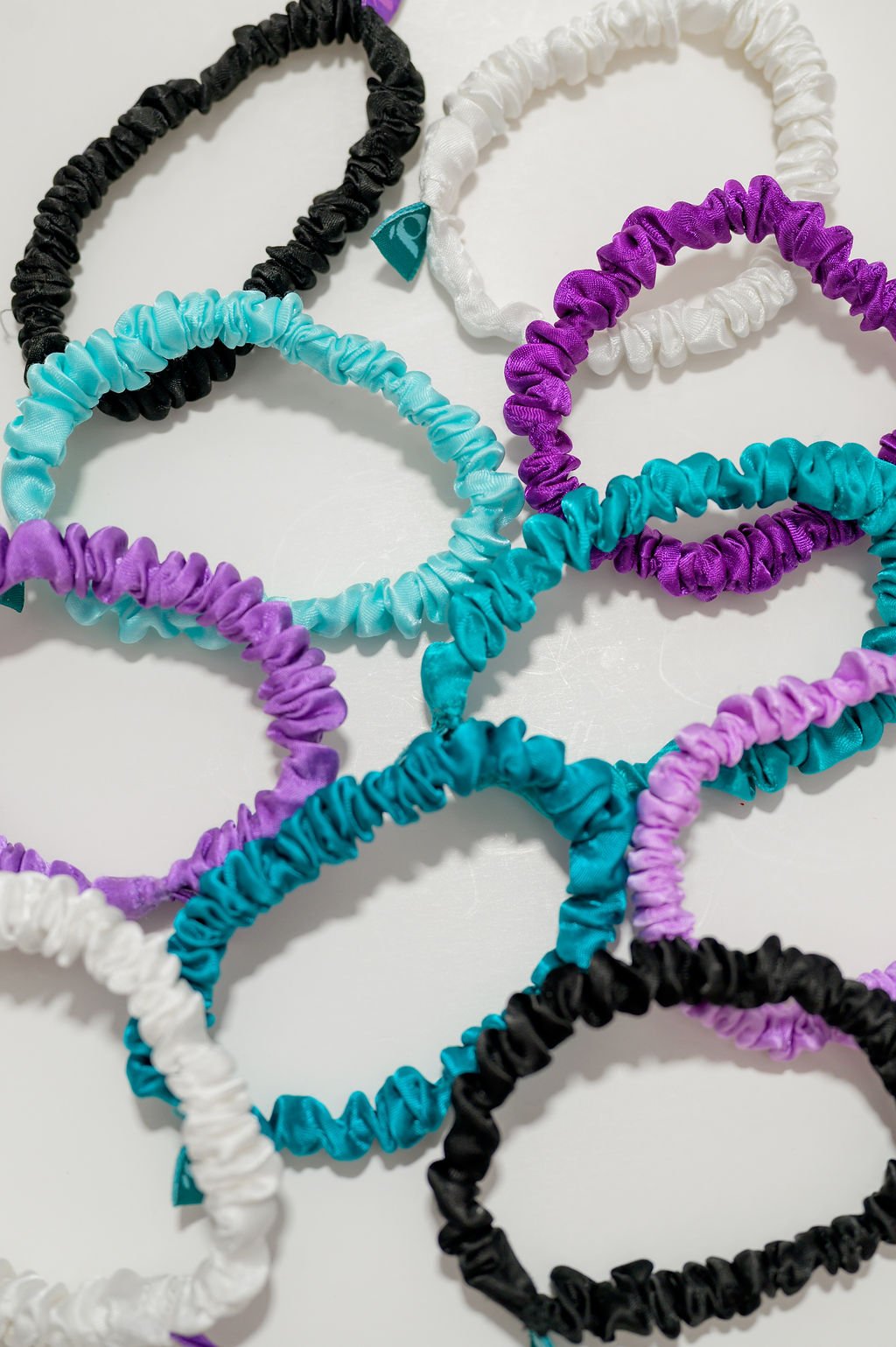
Close-up of several modal silk hair ties against a soft white backdrop, showing the fabric's smooth sheen and lightweight drape.
Moisture Management and Cooling Comfort
Modal absorbs moisture more readily than cotton and releases it faster, which is why it shows up in summer wear, underwear, and activewear. It wicks perspiration away from skin and dries quickly, making it a sensible choice for accessories worn against the scalp or wrist during workouts.
Drape, Sheen, and Skin-Friendly Feel
Modal drapes softly and holds a gentle luster that reads as refined without the high shine of pure silk. Its smooth surface reduces friction, a real advantage for delicate or breakage-prone hair, and the finished fiber is generally considered hypoallergenic and skin-friendly, since it does not trap irritants the way rougher weaves can.
Downsides of Modal Fabric You Should Know Before Buying
Modal has real limitations. The fiber can pill with friction over time, especially in low-quality blends, and it loses strength when wet, so aggressive wringing or high-heat drying shortens its life.
There is also a sustainability caveat. Modal production involves chemical processing, and not all modal is made to the same environmental standard, some producers use closed-loop systems that recover and reuse the solvent, while others do not.
How to Care for Modal Fabric So It Lasts
Caring for modal fabric is straightforward if you respect two rules: keep the heat down and avoid rough handling. Modal loses strength when wet, and silk in a blend can snag, fade in sunlight, and weaken with harsh detergents. The routine below protects both fibers.
Washing
- Water temperature: Cold water is safest. Hot water is the fastest way to shrink modal and dull silk's sheen.
- Cycle: Gentle or delicate cycle. Avoid heavy agitation, which causes pilling and stretching.
- Detergent: Mild, pH-neutral detergent. Skip bleach, fabric softener, and enzyme-heavy detergents, which can degrade cellulose fibers over time.
Drying
- Air dry flat or line dry. High heat from a dryer is the leading cause of shrinkage and fiber weakening.
- Avoid direct sunlight for extended periods, especially for silk-containing blends, which can fade.
- Reshape while damp if the garment or accessory has a specific form, such as a hair tie or a draped top.
Ironing and Steaming
- Low heat only. Use the lowest setting on your iron, and place a pressing cloth between the iron and the fabric to protect the sheen.
- Steam is gentler than direct heat for removing wrinkles from modal silk blends.
- Avoid pressing creases into silk-dominant blends; they can become permanent.
Storage
- Fold heavy pieces rather than hanging them, which can stretch the fabric over time.
- Store clean. Residual oils and perspiration can attract pests and cause discoloration, especially in silk blends.
- Keep out of direct light for long-term storage to prevent fading.
Preventing Shrinkage, Pilling, Stretching, and Fading
Shrinkage in modal usually comes from heat and agitation, so cold water and air drying prevent most of it. Pilling happens when short fibers surface through friction; a gentle cycle, turning garments inside out, and avoiding rough fabrics in the same load reduce it. Stretching occurs when wet modal is hung or wrung aggressively; drying flat preserves the shape. Fading mostly affects silk-containing blends exposed to sunlight, so store them away from direct light and wash in cold water.
How Blend Ratios Change Care
A modal-dominant blend can usually be machine washed cold and air dried without much fuss. A balanced or silk-dominant blend needs hand washing or a delicate cycle, no wringing, and low-heat ironing. Modal-cotton blends are the most forgiving and often tolerate a gentle machine cycle, though air drying still extends their life. Always follow the most delicate fiber in the blend, if the tag says dry clean only, that reflects the silk content, not the modal.
Following these steps keeps the fabric smooth and colorfast far longer, whether you are caring for a garment or a modal silk hair accessory you use every day.
Sustainability, Sourcing, and How to Identify Real Modal Silk
Identifying real modal silk starts with the label. The US Department of Agriculture's bio-based product information and the FTC's labeling rules both reinforce that fiber content must be disclosed, so a vague label is a warning sign.
On sustainability, modal can be produced responsibly or irresponsibly. Look for brands that name their fiber source, describe their production process, and commit to reducing waste.
Conclusion
Choosing modal silk comes down to understanding what it is: a blend that borrows modal's softness, durability, and moisture management and pairs it with silk's sheen, not a species of silk itself.
If you want that combination in something you use daily, The Pretty Pretties makes hand-dyed, biodegradable hair ties from modal silk and cotton, infused with 100% essential oil microcapsules that release natural aroma for up to a year.
Frequently Asked Questions
What is modal silk fabric made of?
Modal silk fabric is a blend of modal fiber, a semi-synthetic regenerated cellulose made from beechwood pulp, and silk or silk-like fibers. The modal portion gives the fabric its smooth texture, breathability, and shape retention, while the silk content adds luster and a fluid drape. Because the exact ratio varies by maker, check the label: a 60/40 modal-to-silk weave behaves very differently from a 90/10 blend, especially in how it washes and how long it holds color.
Is modal silk the same as real silk?
No. Real silk is a natural protein fiber spun by silkworms, while modal silk is a manufactured blend built on regenerated cellulose. Modal silk costs less, resists wrinkles better, and holds dye more evenly, but it does not match silk's natural temperature regulation or its specific luster. If a label says "modal silk" without a fiber breakdown, treat it as a blend and confirm the percentages before you buy, particularly for clothing or hair accessories that touch sensitive skin.
What are the downsides of modal fabric?
Modal can pill with friction, may shrink if washed in hot water, and loses strength when wet, so rough handling in the laundry shortens its life. Some production methods use chemical processing that raises environmental questions unless the maker documents responsible sourcing. It also stretches over time under heavy loads. These trade-offs are manageable: cold washing, air drying, and gentle rotation between items keep modal fabric soft and intact for years.
How do you wash and care for modal silk fabric?
Wash modal silk in cold water on a delicate cycle or by hand, using a mild detergent without bleach or fabric softener. Turn garments inside out, skip the dryer, and lay flat or hang to dry away from direct sun. If you iron, use the lowest heat setting with a pressing cloth. For hair accessories like modal silk ties, hand washing in cool water and air drying preserves both the fiber and any essential oil finish longer than machine washing.
Most hair accessories force a trade-off between gentleness and grip, and the fabric behind them rarely gets a second thought. The Pretty Pretties closes that gap with modal silk and cotton ties that hold firmly without denting or breaking hair, release calming essential oil aromas, and are made through zero-waste, women-led production. Shop the Lavender Set and turn an everyday accessory into a small, intentional ritual.