
How Long Do Aromatherapy Hair Ties Last? A 2026 Review
· Editorial Team

Table of Contents
- The Two Lifespans of an Aromatherapy Hair Tie
- Scent Retention: The Microencapsulation Degradation Timeline
- Signs It Is Time to Replace Your Hair Tie
- How to Refresh Aromatherapy Hair Ties
- How to Store Essential Oil Infused Hair Ties
- Material-Specific Durability: Silk, Cotton, and Synthetic Fibers
- Daily Maintenance Habits That Extend Hair Tie Life
- Frequently Asked Questions
Last Updated: September 20, 2026
The Two Lifespans of an Aromatherapy Hair Tie
Aromatherapy hair ties live two lives at once, and they rarely end on the same day. The elastic core wears out on one schedule. The scent fades on another. Understanding that split is the whole answer to how long do aromatherapy hair ties last.
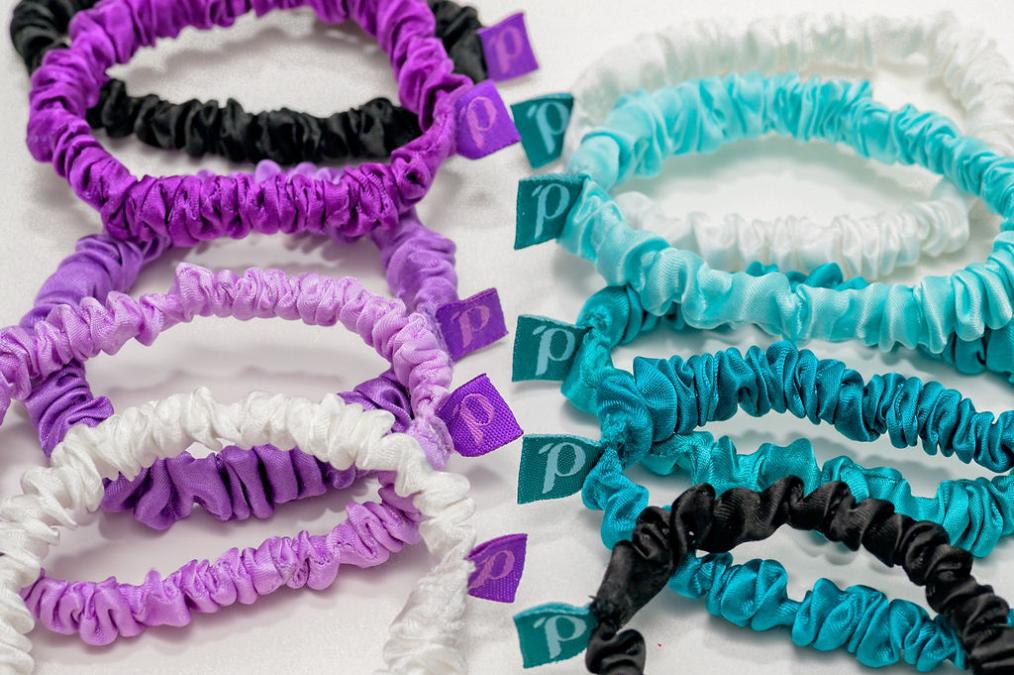
At The Pretty Pretties, we build each tie around hand-dyed modal silk and organic cotton, infused with microencapsulated essential oils. The fabric and the elastic decide the physical lifespan. The capsules decide the scent lifespan.

Below, we break down both timelines, what speeds them up, and the habits that stretch each one further.
Scent Retention: The Microencapsulation Degradation Timeline
Scent typically outlasts structure. A well-made essential oil infused hair tie releases noticeable aroma for up to a year when it is stored and washed with care. After that, the capsules thin out and the throw weakens gradually rather than stopping overnight.
How Microencapsulation Works and Why It Matters
Microencapsulation is the process of sealing essential oil inside microscopic polymer shells that sit within the fabric fibers. The shells rupture slowly through friction and warmth, which is why a tie smells strongest when you stretch it and pull it through your hair.
That design is also why the scent fades in stages instead of vanishing.
What Accelerates Scent Fade
Heat, moisture, and direct sunlight are the three biggest enemies of scent retention. A tie left on a sunny windowsill or tossed into a hot car loses its aroma far sooner than one kept in a drawer.
- Washing with harsh detergent strips the outer capsule layer
- Storing ties loose in a bag exposes them to constant friction
- Leaving ties in a damp gym bag encourages degradation
- Applying heavy hair products over the tie coats the fabric and blocks scent diffusion
Signs It Is Time to Replace Your Hair Tie
Replace a hair tie when the elastic no longer springs back after stretching, or when the fabric shows visible fraying along the seam. Scent loss alone is not a reason to discard a tie that still holds well.
Look for these signals:
- The band stays stretched out instead of snapping back to shape
- Threads are pulling loose at the join
- The tie leaves a deep dent in your hair after a short wear
- The fabric feels stiff, thin, or rough compared to when it was new
- The tie slips during a ponytail or bun, even when wrapped tightly
Aromatherapy-Specific Replacement Triggers
With an essential oil infused hair tie, you are tracking two separate clocks. The elastic may still snap back perfectly while the scent has already faded to nothing. Here is how to tell which lifespan has ended:
- Scent is gone, structure is fine. The microcapsules have released their oil. The tie still works as a hair tie, but it no longer delivers aromatherapy. This is the most common scenario and the one most people misread as "the tie is worn out."
- Structure is gone, scent is fine. The elastic core has fatigued even though the capsules still hold oil. You will smell the scent when you stretch the tie, but it will not hold a ponytail. This happens faster with daily wear and tight wrapping.
- Both are gone. The tie has reached the end of its dual lifecycle. Time to replace.
The Hygiene Factor No One Talks About
Most people never clean their hair ties, and that oversight shortens lifespan more than most wear-and-tear. Ties collect scalp oils, styling product residue, dead skin cells, and bacteria. That buildup does two things: it breaks down fabric fibers from the inside, and it coats the microcapsules so scent cannot release properly.

How to Refresh Aromatherapy Hair Ties
Refreshing a faded tie is possible, but only within limits. You can revive a weak scent by placing the tie in a sealed bag with a few drops of the same essential oil for a day or two. The fabric absorbs some of the aroma and holds it for a short while.
Why Refresh Works Differently on Different Materials
Scent retention after refreshing depends heavily on the fabric. Silk and modal blends have a tighter weave that holds oil longer but releases it more slowly. Cotton is more porous, so it absorbs oil quickly but also lets it evaporate faster.
2 Pk of 100% Essential Oil Hair Ties →
Refresh vs. Replace: When to Do Which
Refreshing makes sense when the elastic is still strong and the fabric is in good condition. It is a stopgap, not a permanent fix. Here is a simple decision guide:
- Elastic snaps back, fabric intact, scent weak. Refresh. You will get a few more weeks of aroma.
- Elastic snaps back, fabric intact, scent completely gone. Refresh may not work. The capsules are exhausted, and the fabric may be saturated with old oil residue that blocks new oil from absorbing.
- Elastic fatigued, fabric fraying. Replace. No amount of oil will fix a structural failure.
- Elastic fine, fabric stiff or coated. Wash first, then refresh. Buildup blocks oil absorption.
A Gentler Option: Rotation
Rotate your ties. Wear each one less often and store the rest in a sealed container. Rotating spreads the wear across the set, so no single tie burns through its capsules in a few weeks. A set of five ties worn in rotation will outlast a single tie worn daily by roughly the same factor, because each tie gets one-fifth the friction, one-fifth the moisture exposure, and one-fifth the capsule rupture events.

How to Store Essential Oil Infused Hair Ties
Store essential oil infused hair ties in a cool, dark, dry place, ideally in a sealed pouch or case. This single habit does more for longevity than any other step.
Good storage options:
- The travel case that comes with a Pretties set, which keeps ties separated and out of light
- A small cotton drawstring bag in a dresser drawer
- A lidded jar kept away from bathroom humidity
Material-Specific Durability: Silk, Cotton, and Synthetic Fibers
Material choice drives durability more than any other factor. Silk and cotton blends generally hold up longer and treat hair more gently than standard synthetic elastics, though each material has trade-offs.
Elasticity and Stretch Recovery
Elasticity determines how well a tie holds its shape over time. A quality band stretches and returns to its original size hundreds of times before it starts to loosen. Lower-grade elastics lose stretch recovery much sooner, which is why they slip and need constant re-wrapping.
Sanitization and Hygiene
Most people never clean their hair ties, and that is a mistake. Ties collect scalp oils, styling product residue, and dead skin cells, all of which break down fabric and trap odor.
Daily Maintenance Habits That Extend Hair Tie Life
A few small habits separate a tie that lasts months from one that gives out in weeks. None of them take more than a few seconds.
- Remove the tie before bed rather than sleeping in it
- Rotate between several ties instead of wearing one daily
- Avoid wrapping the same band too tightly, which strains the elastic core
- Keep ties away from perfume, hairspray, and heavy oils
- Wash gently and dry flat, never in a hot dryer
- Store in a sealed case when not in use
Frequently Asked Questions
How long should a hair tie last?
Aromatherapy hair ties made from modal silk and organic cotton, like the ones from The Pretty Pretties, are designed to hold their shape longer because the fabric resists the elastic fatigue. Scent retention adds a second timeline: the brand states its essential oil microencapsulation releases aroma for up to one year, so the functional life and the aromatic life run on different clocks.
Do aromatherapy oils go bad?
Essential oils oxidize over time, especially when exposed to heat, light, and air. In a microencapsulated hair tie, the oils sit inside tiny protective shells that slow this process, which is why the scent can last months instead of weeks. Once those shells break down from washing, stretching, and UV exposure, the oils release faster and the aroma fades. Storing your ties away from direct sunlight and humidity is the simplest way to slow that degradation and get closer to the full scent lifespan.
How do you refresh the scent of aromatherapy hair accessories?
Start by storing them in an airtight pouch or the travel case they came in, which traps residual oils and keeps the scent concentrated. You can also place a single drop of the same essential oil, such as lavender or peppermint, on a cotton ball and leave it in the storage container overnight so the fabric absorbs the aroma. Avoid soaking the ties in water or oil directly, since that can break down the elastic and shorten the tie's overall lifespan.
Are biodegradable hair ties less durable than standard elastics?
Not necessarily. Durability depends on the fabric and elastic core, not on biodegradability alone. A tie made from modal silk and organic cotton with a quality elastic core can hold a firm grip through vigorous activity while still breaking down in landfill conditions over time. The trade-off is usually care: natural fabrics need gentler washing and proper storage to match the lifespan of their synthetic counterparts.
How does microencapsulation affect the lifespan of essential oil hair ties?
Microencapsulation wraps essential oil molecules in microscopic shells that release scent gradually as the fabric moves and stretches. This slows scent diffusion, so a tie can smell fresh for months rather than days. The shells degrade over time from friction, moisture, and heat, which is why the scent eventually fades even if the elastic still works. Knowing this helps you separate two questions: whether the tie still holds your hair, and whether it still smells like lavender or peppermint.