
Biodegradable Hair Care Accessories: 2026 Guide
· Editorial Team

Table of Contents
- What Makes Hair Accessories Biodegradable?
- Best Eco Friendly Hair Accessories for Every Hair Type
- Benefits of Modal Silk Hair Accessories
- Materials to Look For: Bamboo, Wood, Cotton, and More
- How to Identify Truly Biodegradable Products
- Building a Zero Waste Hair Care Routine
- The Hidden Problem: Microplastic Shedding in Hair Ties
- End-of-Life Disposal Instructions for Biodegradable Accessories
- Frequently Asked Questions
Last Updated: September 26, 2026
What Makes Hair Accessories Biodegradable?
Biodegradable hair care accessories are styling tools designed to break down naturally through microbial action, returning to the soil without leaving persistent synthetic residue. The key distinction lies in what happens after you stop using them, not just what they're made from.
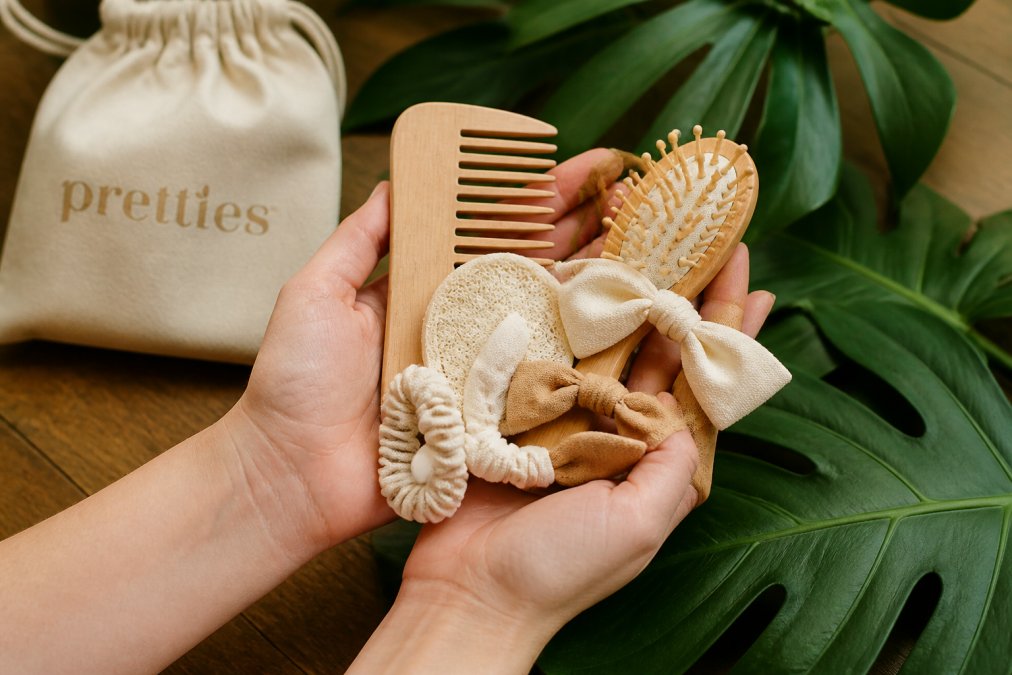
Most conventional hair ties and claw clips are built from petroleum-based plastics that persist for decades. A biodegradable accessory, by contrast, is constructed from materials that microorganisms can consume under the right conditions. This guide from The Pretty Pretties examines what actually qualifies as biodegradable hair care, how to verify claims, and how to build a routine that reduces waste without sacrificing hold or hair health.
Understanding Biodegradation and Composting
Biodegradation is the process by which living organisms break down a material into natural compounds like water, carbon dioxide, and biomass. The timeline varies dramatically based on material composition, environmental conditions, and the presence of oxygen.
Composting is a controlled form of biodegradation. A material that breaks down in a home compost bin within months is far more valuable than one requiring industrial conditions that most households cannot replicate. The FTC Green Guides set standards for how companies can market biodegradability claims, requiring that products break down within one year unless otherwise specified.
| Term | What It Means | Typical Timeline |
|---|---|---|
| Biodegradable | Breaks down via microorganisms | Weeks to years |
| Compostable | Breaks down into usable compost | 90 days to 1 year |
| Zero-waste | No waste sent to landfill | Varies by system |
| Plastic-free | Contains no synthetic polymers | Immediate distinction |
Best Eco Friendly Hair Accessories for Every Hair Type
The best eco friendly hair accessories match material and structure to hair texture. A delicate cotton tie that works beautifully on fine hair may snap under the tension of thick, curly hair. Choosing correctly means understanding both your hair's needs and the material's limits.
Why Texture Determines Material Choice
Hair texture affects how much friction, tension, and moisture an accessory must handle. Fine hair has a smaller diameter and less structural protein per strand, so it dents easily and slips out of loose ties. Medium hair tolerates most materials. Thick hair has more mass and requires wider surface area to distribute tension. Curly and coily hair has uneven cuticle layers that catch on rough surfaces, causing frizz and breakage.
Material behavior follows from these properties. Organic cotton provides gentle grip but absorbs moisture and can roughen with repeated washing. Modal silk glides over strands, reducing friction, but offers less grip on very fine hair. Bamboo and wood hold their shape under tension, making them ideal for thick hair that would deform softer materials. Bio-acetate resists warping and works well for claw clips that must clamp dense sections without cracking.
Matching Accessories to Hair Types
Fine hair (low density, small strand diameter): Choose lightweight modal silk or cotton ties with moderate stretch. Avoid heavy claw clips that slide out. A slim bamboo comb or wooden pin adds hold without crushing volume. Scrunchies should be small and made from single-layer fabric to prevent slipping.
Medium hair: Most materials work. Organic cotton scrunchies and bio-acetate claw clips offer a balance of grip and gentleness. Wooden barrettes handle half-up styles without pulling.
Thick hair: Wider ties with substantial fabric coverage are essential. Modal silk ties in a wide flat shape distribute tension across a larger area. Bamboo claw clips with long teeth grip dense sections. Avoid thin elastic ties that dig in and cause breakage at the crown.
Curly and coily hair: Friction is the enemy. Modal silk and smooth bio-acetate reduce cuticle disruption. Use wide, seamless ties or satin-lined scrunchies.
The Durability Trade-Off
Natural materials can degrade prematurely if not maintained. Cotton ties that stay damp lose fiber strength. Bamboo clips left in humid bathrooms may develop surface mold. Modal silk, while durable, can snag on rough edges. The solution is simple maintenance: rotate accessories, dry them fully after use, and store them away from direct moisture. A well-cared-for modal silk tie can last a year or more of daily use, after which it biodegrades.
Benefits of Modal Silk Hair Accessories
Modal silk hair accessories offer a combination of gentleness, durability, and breathability that synthetic satin cannot match. Modal is a semi-synthetic cellulose fiber derived from beech wood pulp, and when woven into silk-like fabric, it creates a surface that glides over hair strands rather than catching them.
Materials to Look For: Bamboo, Wood, Cotton, and More
Material selection determines everything about an accessory's environmental impact, from sourcing to disposal. The most sustainable options share three traits: renewable origin, low processing intensity, and verified biodegradability.
Natural Fibers and Bio-Acetate
Bamboo grows rapidly without pesticides and can be shaped into clips, pins, and combs. Wood offers similar benefits with greater structural strength. Organic cotton provides softness and breathability for ties and scrunchies.
| Material | Best For | Durability | Biodegradation |
|---|---|---|---|
| Bamboo | Claw clips, combs | High | 6-12 months |
| Wood | Pins, barrettes | Very high | 1-3 years |
| Organic cotton | Ties, scrunchies | Moderate | 3-6 months |
| Modal silk | Ties, scrunchies | High | 6-12 months |
| Bio-acetate | Claw clips | High | 1-2 years |
How to Identify Truly Biodegradable Products
Verifying biodegradability claims requires reading beyond the marketing language. Many products labeled "eco-friendly" contain synthetic elastic cores or polyester thread that prevent full breakdown.
Building a Zero Waste Hair Care Routine
A zero waste hair care routine starts with fewer, better accessories. The goal is not deprivation but intentionality: owning pieces that last, serve multiple purposes, and return to the earth when worn out.
The Hidden Problem: Microplastic Shedding in Hair Ties
Synthetic hair ties shed microplastics every time you stretch, adjust, or remove them. These particles enter wastewater systems and eventually waterways, where they persist indefinitely.
End-of-Life Disposal Instructions for Biodegradable Accessories
Disposal is where most guides stop, but it's the step that determines whether biodegradability actually happens. A compostable hair tie thrown in a landfill may not break down for years because landfills lack the oxygen and microbial activity required. The same tie in a home compost bin can break down in months. Understanding the difference, and maintaining your accessories so they last long enough to justify their materials, is the missing piece in most sustainable hair care advice.
The Durability vs. Biodegradability Trade-Off
A common worry is that natural accessories will fall apart too quickly. In practice, the opposite is often true when you maintain them properly. Synthetic ties may last longer in literal terms, but they shed microplastics every time you stretch them. Natural fiber ties that last a year and then biodegrade offer a cleaner total impact. The key is preventing premature degradation.
How to Compost or Recycle Each Material
The Pretty Pretties designs its modal silk and cotton ties for full biodegradability, with zero-waste production practices and ethically sourced materials. For those building a sustainable hair care collection, these pieces offer a firm hold across all hair types and textures.
Frequently Asked Questions
What makes a hair accessory biodegradable?
A hair accessory is biodegradable when it is made from natural materials that can be broken down by microorganisms into water, carbon dioxide, and biomass. Look for materials like bamboo, wood, organic cotton, modal silk, and bio-acetate. These materials decompose within months to a few years, unlike synthetic plastics that persist for centuries.
Are traditional hair ties bad for the environment?
Yes, most traditional hair ties contain synthetic rubber and plastic that do not biodegrade. They contribute to landfill waste and can shed microplastics into waterways. Additionally, they are often not recyclable. Switching to biodegradable options like those made from organic cotton reduces environmental impact and supports a zero waste hair care routine.
How do I dispose of biodegradable hair accessories?
Disposal depends on the material. For compostable accessories, check if they meet composting standards; you can add them to a home compost or industrial compost facility. For natural fibers like cotton or modal silk, you can compost them if they are free from synthetic blends. If unsure, cut them into small pieces and bury them in soil; they will break down over time. Never litter them in natural environments.
What materials should I look for in sustainable hair accessories?
Seek out natural fibers such as organic cotton, bamboo, wood, modal silk, and bio-acetate. These materials are renewable, biodegradable, and often produced with less environmental impact. Avoid synthetic materials like polyester, nylon, and conventional plastic.
Do biodegradable hair ties hold thick hair well?
Yes, many biodegradable hair ties are designed to provide a firm hold for all hair types, including thick and curly hair. Brands like The Pretty Pretties offer modal silk and cotton ties that are durable and non-denting, providing a secure hold without slipping during workouts or daily activities.
Are essential oil-infused hair ties safe for sensitive scalps?
Essential oil-infused hair ties can be safe for sensitive scalps if they use pure, high-quality essential oils and are free from synthetic fragrances. However, individuals with known allergies should patch-test first. The Pretty Pretties uses 100% essential oil microencapsulation, which releases natural aromas gradually.
The challenge with biodegradable hair accessories isn't finding them. It's verifying that they actually break down and disposing of them correctly. The Pretty Pretties addresses both: hand-dyed modal silk and cotton ties that biodegrade fully, 100% essential oil microencapsulation for lasting scent, and a firm hold that protects against damage and denting. Get started with The Pretty Pretties and build a hair care routine that aligns with your values from first use to final compost.