
Preventing Hair Dents While Sleeping: 7 Simple Steps
· Editorial Team

Table of Contents
- Why Hair Dents Form Overnight (and Why They're Worth Preventing)
- How to Tie Hair at Night Without Dents
- Sleep Hairstyles for Long Hair That Leave No Crease
- Why a Silk Scrunchie for Sleeping Beats a Standard Elastic
- How to Prevent Hair Tangles While Sleeping
- Match Your Method to Your Hair Type and Morning Style
- What to Do When a Dent Appears in the Morning
- Conclusion
- Frequently Asked Questions
Last Updated: October 20, 2026
Why Hair Dents Form Overnight (and Why They're Worth Preventing)
Hair dents are the ridges and flat spots that form when pressure and friction hold a section of hair in one position for hours. At The Pretty Pretties, we see the same pattern in customer messages: a perfect blowout ruined by one crease near the hairline.

The cause is simple. Your head presses hair against a pillow for hours. Cotton grips the strand. A tight tie bends it. When you get up, the bend stays.
Dents are worth preventing for two reasons. Second, the same pressure that creases hair also strains the strand, which is why dermatologists at the American Academy of Dermatology point to friction and tension as common causes of breakage.
Most guides focus on general overnight damage. This one focuses on dents specifically: how to tie, position, and cover hair so you wake up with a smooth surface. Below, we walk through seven steps in order.
How to Tie Hair at Night Without Dents
The fix starts with tension. A tie that's too tight leaves a hard band mark. One that's too loose lets hair shift and tangle. The goal is a hold that keeps hair in place without pressing it flat.
The Tension Test: Finding the Sweet Spot
Here's a quick test. Tie your hair, then slide two fingers under the band at your scalp. If they slide in easily, it's too loose. If you can't get one finger under, it's too tight.
You want one finger to fit with slight resistance. That's the sweet spot: enough hold to stay put, not enough to press a line into the hair.
A common mistake is tying hair while it's wet and tight. Wet hair stretches, and a tight band on damp hair sets a deeper crease.
Positioning Matters: Where You Place the Tie
Placement decides where the dent lands. A tie at the same spot every night creates a repeat crease in the same place.
Move it. Alternate between a low ponytail at the nape and a loose bun higher up. That spreads pressure across different sections of hair.
Also, keep the tie away from your face-framing pieces. Those strands show first in the morning.
Sleep Hairstyles for Long Hair That Leave No Crease
Long hair needs containment, not compression. Two styles do this well, and both leave hair smooth by morning.
The Loose Braid vs. the Low Ponytail
The loose braid is the better pick for most people. Braiding gathers hair into sections that bend gently instead of folding sharply. Keep it loose, starting below the nape, and secure the end with a soft tie. You get wave, not a crease.
The low ponytail works when you want a straighter morning result. Loop the tie loosely and stop before the last pull-through, so hair sits in a soft loop rather than a tight band.
| Style | Best For | Dent Risk | Morning Result |
|---|---|---|---|
| Loose braid | Long, thick hair | Low | Soft waves |
| Low ponytail | Straight, fine hair | Low if loose | Straighter |
| Loose bun | Curly, coily hair | Low | Preserved curl |
| Tight topknot | None | High | Hard crease |
Whichever you choose, skip tight elastics and restrictive ties. They press hard edges into hair and leave marks that don't brush out.
Why a Silk Scrunchie for Sleeping Beats a Standard Elastic
A silk scrunchie for sleeping wins because the fabric glides. Silk and satin create less friction than cotton or bare elastic, so hair shifts instead of catching and folding.
Standard elastics have a second problem: a thin band concentrates pressure on one narrow strip of hair. That's where the sharpest dents form.
Look for three things in a sleep tie:
- Smooth fabric that slides rather than grips
- A wide band that spreads pressure over more hair
- Gentle stretch that holds without pinching
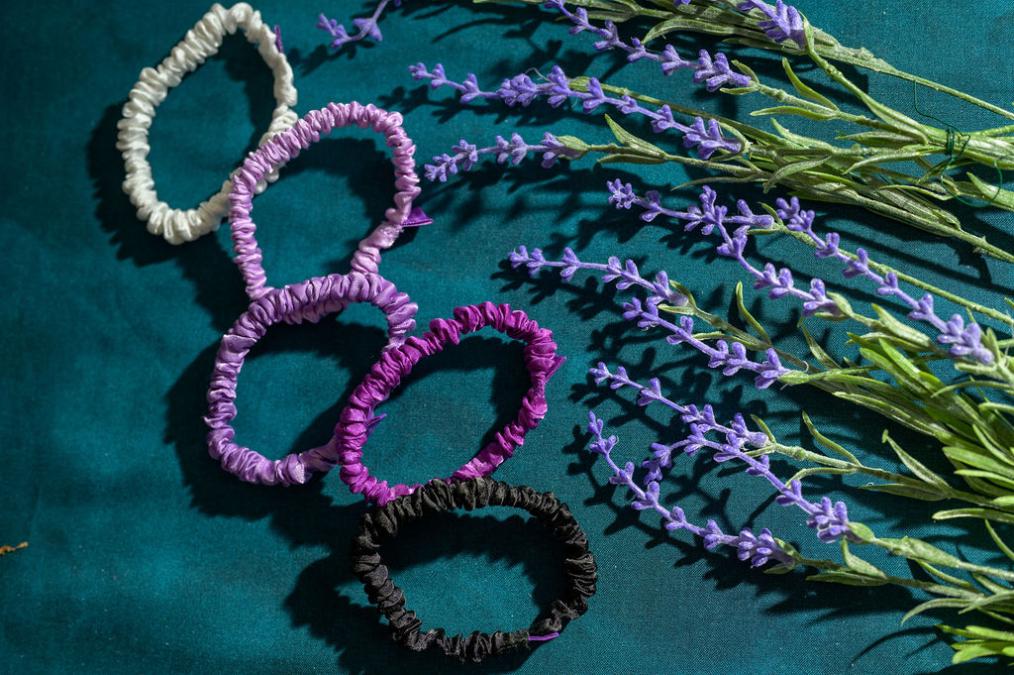
This is where our own ties fit in. The Pretty Pretties Lavender Set uses hand-dyed modal silk and cotton, so the surface stays smooth against hair. The band is built for a firm hold on all hair types, which matters if you move a lot in your sleep.
Pretties Scented Hair Ties | 100% French Lavender Essential Oils | Pk of 5 →

How to Prevent Hair Tangles While Sleeping
Tangles and dents have the same root cause: friction.
To prevent hair tangles while sleeping, detangle fully before bed. Work from the ends up with a soft brush, not from the roots down.
Then reduce movement:
- Gather hair loosely so it stays in one area
- Use a silk or satin pillowcase to cut friction
- Skip heavy oils that make hair stick to itself
A loose braid does double duty here. It keeps long hair from wrapping around your neck and knotting.
Match Your Method to Your Hair Type and Morning Style
The right method depends on your hair texture, length, and what you want to see in the mirror. A tight bun that works for one person flattens another. Use this guide to pick a setup that minimizes dents without sacrificing your morning style.
Straight, Fine, Curly, or Blowout: A Quick Decision Guide
- Straight hair: A loose low ponytail with a silk scrunchie or a silk wrap. Dents show most on straight hair because the cuticle lies flat and reflects light, so any bend catches the eye. Keep pressure light and avoid creasing the hairline.
- Fine hair: A soft scrunchie only, placed low. Fine strands crease fast under thin elastics and hold the shape longer. Skip clips and bobby pins, which leave sharp marks.
- Curly or coily hair: A loose bun with a silk scrunchie, or a satin-lined bonnet. This preserves curl shape, cuts frizz, and prevents the flattened side that comes from pressing curls against a cotton pillowcase.
- A fresh blowout or silk press: A loose wrap or a very loose ponytail secured with a wide silk band. Anything tight will flatten the volume you paid for, and the crease often sets within an hour.
Length Changes the Setup
Short hair mostly needs a smooth pillowcase and a light hand. Long hair needs containment plus a smooth surface, because loose ends wrap around the neck and knot. Mid-length hair is the trickiest: long enough to tangle, short enough that a high bun pulls at the hairline. A low loose braid usually solves it.
Match the Method to Your Morning Result
- Want soft waves? A loose braid on dry hair.
- Want straighter hair? A low ponytail looped loosely, or a silk wrap.
- Want preserved curls? A bonnet or a loose bun with a silk scrunchie.
- Want volume at the root? Skip the topknot and sleep with hair loose over a satin pillowcase, flipping it above the head.
What to Do When a Dent Appears in the Morning
Sometimes a dent happens anyway. The fix depends on how deep it is, and you don't always need heat. Work from the gentlest method up, and stop as soon as the crease releases.
Start With Water, Not Heat
Dampen the creased section with your fingers or a light mist, then brush it straight and let it air dry. Most light dents release this way within a few minutes. If the crease sits near the hairline, mist only that section so you don't re-wet the whole style.
For a Stubborn Crease
- Mist the area lightly with water.
- Wrap the section around a large velcro roller or pin it smooth against the head.
- Leave it while you get ready, ideally 10 to 15 minutes.
- Remove and brush through.
A velcro roller works because it bends the hair in the opposite direction of the dent, which resets the shape without heat. Pin curls do the same job for shorter sections.
When Light Heat Is Appropriate
Heat is the last resort. If you use a blow dryer, keep it on low and hold it well away from the strand, moving constantly. High heat on the same crease every morning adds up over time and can leave the section looking dry or frizzy. Never hold a hot tool against a crease and leave it.
Find the Cause So It Stops Recurring
If the dent is always in the same place, your tie, your pillow, or your sleep position is the culprit. Run this quick check:
- Crease in a band shape? Your tie is too tight or too narrow. Switch to a wide silk band and loosen it.
- Crease near the hairline or temple? You're sleeping with your face pressed into the pillow, or a pillow seam is pressing in. Rotate the pillow or switch to a smooth case.
- Crease that looks like a fold? Hair was trapped under your head or body. Gather hair above the head or into a loose braid so it stays clear.
- Crease that won't release with water? Hair was damp when you tied it. Let it dry fully before bed.
Fix the cause, and the morning repairs stop. A dent-free morning comes down to three habits: a smooth tie, gentle tension, and a consistent routine.
Conclusion
A dent-free morning comes down to three habits: a smooth tie, gentle tension, and a consistent routine. Get those right and most creases never form.
At The Pretty Pretties, we built our scented hair ties for exactly this. Each set comes with five hand-dyed ties made from modal silk and cotton, designed with a firm hold that protects hair against damage and denting.
Ready to wake up smoother? Shop the Lavender Set and make your night routine work for your hair.
Frequently Asked Questions
How can you prevent hair dents while sleeping?
The two biggest fixes are switching to a soft, wide hair tie and loosening your tension. A silk scrunchie for sleeping spreads pressure across a wider area than a thin elastic, so it leaves less of a mark. Tie your hair loosely, position the tie away from the crown where you rest your head, and consider a loose braid instead of a tight topknot. If you use a cotton pillowcase, a silk or satin one reduces friction and helps prevent hair dents. Consistency matters more than any single trick.
How should you tie your hair at night without leaving a crease?
Use a soft, fabric-covered tie and wrap it no more than twice around a loose gather of hair. Leave a finger's width of slack so the band doesn't press into the strands. Keep the tie low, at the nape of your neck, rather than high on the head where your pillow makes contact. If your hair is long, a loose braid secured with a soft tie at the very end works well. Avoid tight elastics and restrictive ties that pinch the hair into a hard fold.
What is the best way to protect hair while you sleep?
Combine three habits: a smooth surface, a loose style, and a gentle tie. A silk or satin pillowcase reduces friction, which cuts tangles and frizz. A loose braid or low ponytail keeps long hair from wrapping around your neck. A soft scrunchie, like the Pretties Lavender Set, holds hair without a hard crease. If your hair is dry or prone to breakage, a light leave-in conditioner before bed adds slip. These steps together do more than any single product.
What can you do about hair dents when you wake up?
Dampen the dented section with water or a little leave-in conditioner, then blow-dry on low heat while brushing the strand straight. For stubborn creases, wrap the section around a round brush for a minute. A quick pass with a flat iron on low heat works for straight hair, but keep heat exposure brief. If dents keep appearing in the same spot, check your tie placement and tension. Moving the tie lower or loosening it usually solves recurring marks within a few nights.