
Licemamas Alternative for Daily Use: Safe Scalp Care
· Editorial Team

Table of Contents
- Why Daily Scalp Maintenance Matters for Lice Prevention
- How to Verify Ethical Hair Accessory Brands
- Benefits of Modal Silk Hair Ties for Daily Wear
- Zero-Waste Hair Care Products: What to Look For
- Comparing Daily-Use Alternatives: Features and Safety
- Daily Maintenance Routines for High-Risk Environments
- Cost-Benefit Analysis: DIY vs. Professional Equipment
- Frequently Asked Questions
Last Updated: September 14, 2026
Why Daily Scalp Maintenance Matters for Lice Prevention
Daily scalp maintenance means keeping the scalp clean, conditioned, and monitored between treatments rather than reacting only after an infestation appears. For anyone searching for a licemamas alternative for daily use, the shift in mindset matters: prevention routines run every day, while eradication products run for a week or two.
Most treatment guides focus on killing adult lice and nits after they've settled in. Far fewer explain how to make the scalp a less inviting environment in the first place, especially in households, classrooms, and gym routines where re-infestation is a constant risk.
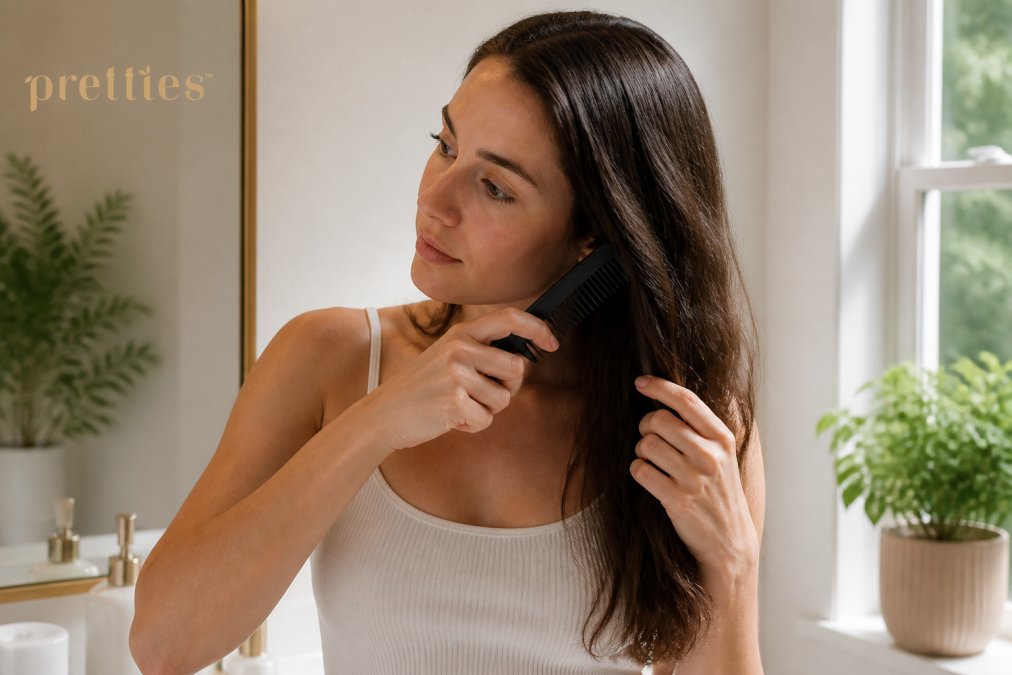
Head lice, known clinically as pediculosis capitis, feed on blood from the scalp and attach their eggs, called nits, to the hair shaft near the root. Eggs incubate for roughly a week, and because nymphs are tiny and easy to miss, a scalp check performed only when itching starts often means the infestation has already been present for days or weeks (the CDC).
This guide from The Pretty Pretties covers how to build a daily routine that supports scalp health, how to verify ethical hair accessory brands, and how to compare daily-use options on safety rather than marketing claims.
How to Verify Ethical Hair Accessory Brands
Verifying an ethical hair accessory brand means checking three things: material sourcing, labor disclosure, and end-of-life claims. A brand that publishes all three is easy to trust; one that publishes only a vague sustainability slogan is not.
Start with materials: a brand claiming modal silk or organic cotton should explain where the fiber comes from and how it's processed. Next, look at labor, phrases like "women-led teams" mean little without a named facility, region, or certification. Finally, check the disposal claim: biodegradable is a specific term and should be paired with a description of how the product breaks down.

A practical checklist for evaluating any brand:
- Does the site name the fiber source (modal, cotton, silk) rather than saying "premium fabric"?
- Is there any disclosure of who manufactures the product and where?
- Does the brand state a specific production standard or certification?
- Is the packaging described, and is it reusable or compostable?
- Are care instructions included so the item lasts instead of being replaced monthly?
A common mistake is treating a green color palette and recycled-paper packaging as proof of an ethical supply chain. Those are presentation choices, not verification. If a brand won't tell you where the fiber came from, assume you can't confirm it.
Benefits of Modal Silk Hair Ties for Daily Wear
Modal silk hair ties reduce friction and denting compared with standard elastic bands, which is why they suit daily wear better than treatment-day accessories. Since a prevention routine means tying hair back repeatedly, the accessory itself becomes part of scalp and hair health.

Standard rubber bands grip by pinching, which over time causes breakage along the hair shaft where the band sits. Modal silk and cotton blends distribute tension more evenly, so the hair isn't crushed at a single point, less snapping, fewer split ends, and no deep crease after a full workday.
For thick, curly, or fine hair, the hold matters as much as the material. A tie that slips mid-workout gets re-tied tighter, exactly the friction you're trying to avoid.
Zero-Waste Hair Care Products: What to Look For
Zero-waste hair care products are designed so nothing ends up in a landfill after use, including the packaging. For hair accessories, that means biodegradable fibers, reusable storage, and no single-use plastic wrap.
The category gets stretched thin by marketing: a product sold in a plastic sleeve with a "sustainable" label isn't zero-waste, no matter the fiber. What actually counts:
- Fibers that biodegrade at end of life rather than shedding microplastics
- Reusable cases or pouches instead of disposable film packaging
- Production processes that limit water and chemical waste
- A stated take-back or refill option, where the brand offers one
For daily-use accessories, the reusable case is the quiet hero. A small travel pouch keeps ties clean, stops them disappearing into a gym bag, and removes the need to rebuy a pack every few months.
Comparing Daily-Use Alternatives: Features and Safety
The safest daily-use alternative is the one you can wear for hours without scalp irritation, slipping, or hair damage. Treatment products are formulated for short bursts; daily accessories are worn for eight hours or more, so the safety profile is different.
Here's how the main daily-use options compare on the factors that matter for frequent wear.
| Option | Material | Hold | Reusability | Best For |
|---|---|---|---|---|
| Essential oil scented ties | Modal silk and cotton blend | Firm, non-slip | Reusable for months | Daily wear, gym, travel |
| Standard elastic bands | Rubber and synthetic | Tight, pinching | Replaced often | Short-term use only |
| Plastic spiral coils | Coiled plastic | Light hold | Reusable | Fine hair, low activity |
| Metal-free fabric scrunchies | Cotton or jersey | Loose hold | Reusable | Overnight, delicate hair |
The safety question for daily use comes down to two things: what touches the scalp for hours, and what happens during exercise when the scalp is warm and damp. Synthetic bands trap moisture against the scalp, aggravating irritation; breathable natural fibers dry faster and don't hold heat the same way.

Daily Maintenance Routines for High-Risk Environments
High-risk environments, schools, daycares, gyms, shared locker rooms, and sleepaway camps, call for a routine rather than a single product. Lice cannot fly or jump, so transmission happens through direct head-to-head contact or shared items that touch hair (hats, brushes, headphones, pillows, costumes). A daily routine interrupts that chain at the personal level, while household cleaning handles shared surfaces.
A workable daily routine looks like this:
- Morning check (2 minutes). Part the hair in four sections and inspect the scalp near the ears and the nape of the neck, where lice prefer to settle because the skin is warm and the hair is dense. Look for live nymphs (sesame-seed size, tan to translucent) and nits cemented to the hair shaft within a quarter-inch of the scalp, nits further down the shaft are usually already hatched or dead.
- Tie back with a clean accessory. Use a fresh tie from your rotation, not yesterday's stretched one. Loose hair is the single easiest handle for a louse to grab.
- After gym or sport, loosen and air-dry. Don't leave a damp tie against the scalp for the rest of the day. A warm, damp scalp is the environment lice move toward, and a wet band traps that heat.
- Evening wet combing (5 minutes). Run a fine-tooth metal lice comb through damp, conditioned hair. The conditioner stuns lice briefly and lets the comb glide, so the teeth actually reach the scalp instead of skimming the surface. Wipe the comb on a white paper towel between passes, the contrast is what makes a pale nymph visible.
- Weekly deep check. Comb section by section under bright light, working from the crown down. Pay attention to the four hot zones: behind the ears, the nape, the crown, and along the part line.
The thing nobody tells you about wet combing is that consistency beats intensity. Five minutes daily catches far more than a frantic hour once a month, because a nymph that hatches overnight is small enough to miss on a quick pass but large enough to catch on a deliberate one. Expect the first two weeks to feel tedious; after that it becomes a habit, like flossing.
When a class notification changes the routine. If a school or daycare sends home a lice notification, most practitioners recommend shifting from a weekly deep check to a daily one for the next two to three weeks, roughly the length of the full nit-to-adult cycle. A missed nit can hatch, mature, and start laying new eggs within about three weeks, so daily combing during that window is the difference between catching a case at two lice and catching it at twenty.
Household surfaces, briefly. Lice survive off a human scalp for roughly one to two days, so the cleaning list is short: wash bedding and pillowcases in hot water, dry on high heat, and bag stuffed animals or dress-up items that touched hair for two weeks (the CDC). Vacuuming furniture and car seats is reasonable; fogging a house with insecticide is not, and public health agencies advise against it.
Cost-Benefit Analysis: DIY vs. Professional Equipment
The DIY versus professional equipment question comes down to frequency of use, not upfront price. A lice comb used once costs more per use than one used daily for a year, and that reframe changes which option is actually cheaper for a prevention routine.
The frequency math. A professional lice-removal service charges per visit or session, and most active infestations need more than one session because nits hatch on a staggered schedule. A household running a daily prevention routine, by contrast, uses the same comb, conditioner, and hair ties for months. The more often you comb, the lower the cost per use, which is why prevention tools amortize well and one-time treatment services don't.
What the DIY kit actually needs. A fine-tooth metal lice comb with teeth spaced closely enough to catch a nit, a slippery conditioner, bright light, and a set of daily-wear hair ties. That's the whole list. Everything else marketed as a lice product, sprays, repellent shampoos, electronic combs, is optional, and some of it is the part you should be most cautious about.
The safety profile for frequent use. This is where daily-use searchers get the least guidance. Treatment products are formulated for short bursts, a single application, sometimes repeated once after a week, while daily accessories and combing are worn or performed for eight hours or more, day after day, so cumulative exposure is different. Repeated medicated shampoos, especially those containing permethrin, are not intended as a daily habit; overuse can irritate the scalp and contribute to treatment failure as lice develop resistance. Botanical and essential-oil products carry their own risk: undiluted tea tree, eucalyptus, and lavender oils cause contact dermatitis and chemical burns on some scalps, and "natural" does not mean "safe for daily use."
Where professional help earns its fee. If you're dealing with an active infestation, live lice found, nits within a quarter-inch of the scalp, or a case that survived a full course of an over-the-counter product, a professional service earns its fee. Trained technicians can do a thorough comb-out faster than most parents and confirm whether a case is truly resolved. If you're preventing an infestation rather than treating one, that service is money you don't need to spend.
The accessory side of the ledger. The same frequency logic applies to hair ties. A set of hand-dyed modal silk ties costs more upfront than a bag of drugstore elastics, but each tie lasts months with rotation, while drugstore elastics stretch, snap, and get replaced every few weeks. Over a year, the daily-use option is the cheaper one, and it doesn't pinch, crease, or break the hair shaft along the way. The Pretty Pretties makes this easy to test, since each set includes a reusable case that keeps the ties clean and accounted for.
A note on "green" claims. Cost comparisons often lean on sustainability language, and that language is lightly regulated. Before trusting any "biodegradable," "compostable," or "eco-friendly" label at face value, the Federal Trade Commission's guidance on environmental marketing claims is worth reading, it explains what those terms are supposed to mean and where marketers stretch them.
Frequently Asked Questions
What can I use instead of lice treatment for daily prevention?
For daily prevention, focus on mechanical removal and scalp health rather than chemical treatments. Use a fine-tooth lice comb during your regular hair care routine to catch nits early. Keeping hair tied back in protective styles, especially in high-risk environments like schools or gyms, reduces the chance of contact. Non-toxic accessories that minimize scalp irritation and maintain a healthy scalp barrier are also key components of a daily preventative routine.
Are biodegradable hair ties effective for daily use?
Yes, biodegradable hair ties made from natural materials like modal silk and organic cotton are effective for daily use. They provide a firm hold without slipping, even during exercise. Unlike synthetic elastics that can snag or damage the hair shaft, these ties are gentle on the hair density and scalp. Their durability means they last through repeated use, making them a practical and sustainable choice for everyday styling and preventative hair care.
How do essential oil-infused hair accessories work?
Essential oil-infused hair accessories use microencapsulation to slowly release natural aromas over time, often for up to a year. The essential oils, such as lavender or peppermint, are embedded into the fabric. As you wear and handle the accessory, the capsules break down gradually, releasing the scent. This provides a sensory experience that can promote calm or invigoration, without the need for synthetic perfumes that might irritate a sensitive scalp.
What should I look for in ethical hair accessory brands?
Look for brands that provide clear information about their supply chain, such as where their modal silk or cotton is sourced. Check for certifications regarding fair labor practices and environmental standards. Brands that use zero-waste production methods and are transparent about their manufacturing processes, including women-led teams, demonstrate a commitment to ethical practices. Verifying these details ensures your purchase supports sustainable and responsible production.
Can daily hair accessories help maintain scalp health?
Daily hair accessories can support scalp health by reducing mechanical damage and irritation. Ties made from soft, breathable materials like modal silk prevent pulling and denting, which can weaken the hair shaft and cause breakage. By keeping hair securely but gently away from the face and scalp, they also minimize the transfer of oils and dirt. This creates an environment less favorable for re-infestation and supports overall scalp comfort.