
How to Verify Ethical Hair Accessory Brands (2026)
· Editorial Team

Table of Contents
- Step 1: Start With the Materials List
- Step 2: How to Spot Greenwashing in Fashion
- Step 3: Check for Ethical Manufacturing Certifications
- Step 4: Audit the Supply Chain Transparency
- Step 5: Evaluate Labor Practices and Fair Wages
- Step 6: Ask About End-of-Life and Disposal
- Your Micro-Brand Vetting Checklist
- Frequently Asked Questions
Last Updated: September 22, 2026
Step 1: Start With the Materials List
Learning how to verify ethical hair accessory brands starts with one document: the materials list. A brand's material choices tell you more about its values than any slogan. At The Pretty Pretties, we build every tie from modal silk and cotton because fibers like these can be traced, tested, and returned to the earth.
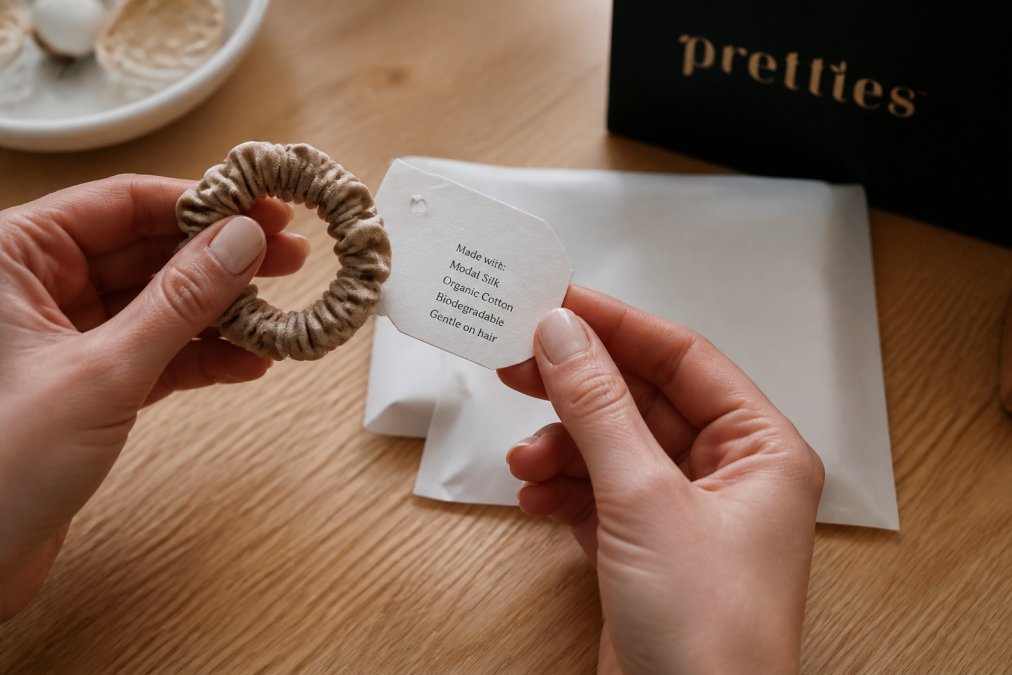
Materials That Hold Up to Scrutiny
Some fibers earn their claims. Others just sound green.
-
Organic cotton, grown without synthetic pesticides and easy to trace
-
Modal silk, a plant-based fiber with a soft, durable finish
-
Recycled materials, reclaimed fabric that keeps waste out of landfills
-
Biodegradable options, ties and bands that break down after use
A brand that names its fibers, and explains where they come from, is off to a strong start.
Red Flags in Material Claims
Vague words hide weak sourcing. Watch for these:
- "Eco-friendly" with no fiber named
- "Natural" on a product made of synthetic alternatives
- No material composition listed anywhere on the site
- Claims with no traceability behind them
If a brand will not say what a tie is made of, assume the worst and keep looking.
Step 2: How to Spot Greenwashing in Fashion
Greenwashing is when a brand markets itself as sustainable without real evidence behind the claim. It is the single biggest trap in this space, and it is everywhere. The Federal Trade Commission's Green Guides set the standards for what environmental marketing claims are allowed to mean. If a claim sounds too soft to test, it probably is.
Vague Language vs. Specific Claims
Compare these two statements:
- Weak: "We care about the planet."
- Strong: "Our ties use GOTS certified organic cotton and plant-based dyes."
The second claim can be checked. The first cannot. Specific claims name a material, a certification, or a process. Vague ones rely on feeling.
The Vegan vs. Ethical Distinction
Vegan means a product contains no animal-derived ingredients. Ethical means workers across the supply chain are treated and paid fairly. A tie can be vegan and still come from a factory with poor labor practices. Do not let one label stand in for the other. Ask about both. The Pretty Pretties's ties are ethically made by women-led teams.
Step 3: Check for Ethical Manufacturing Certifications
Certifications are the fastest shortcut to trust, but only if you know which ones count and how to confirm they are real. Look for third-party certification, not a logo the brand designed itself. A real certificate comes from an outside body that inspects the supply chain and issues a traceable number.
Certifications That Matter for Hair Accessories
- GOTS (Global Organic Textile Standard), covers organic fiber from farm to finished product, including social criteria for workers
How to Verify a Certification in Under Five Minutes
A logo on a product page proves nothing. Here is the verification sequence most shoppers skip:
- Get the certificate number. It is usually printed on the tag, the packaging, or a dedicated sustainability page. If the brand cannot produce a number, treat the claim as marketing.
- Go to the certifying body's own database. GOTS maintains a public searchable registry. Search the brand name, not the number the brand gave you.
- Match the scope. A certificate covers a specific facility, product line, or material. A brand certified for its cotton ties is not automatically certified for its acetate clips.
- Check the expiration date. Certifications lapse. An expired certificate is not a current claim.
What a Certification Does Not Tell You
A certificate covers one slice of a business, not the whole thing. GOTS covers the fiber chain, not shipping or packaging. Treat each certification as one data point, then keep asking questions.
The Vegan vs. Ethical Distinction
Consumers routinely conflate these two labels, and brands exploit the confusion. Vegan means a product contains no animal-derived ingredients, no silk, no leather, no beeswax. Ethical means workers across the supply chain are treated and paid fairly. A tie can be vegan and still come from a factory with poor labor practices.
Red Flags in Certification Claims
- A logo with no certificate number
- A certificate that cannot be found in the certifying body's public registry
- A "certified sustainable" badge that names no certifying organization
- A brand that claims certification for the whole company based on one product line
- A certificate expired more than a year ago
If a brand cannot point you to a verifiable certificate, the claim is decoration.
Step 4: Audit the Supply Chain Transparency
Supply chain transparency means a brand can name the farms, mills, and factories behind its products. Traceability is the proof. A transparent brand publishes this information because it has nothing to hide. Most brands that fail this test are not lying, they simply do not know their own chain past the first tier.
The Four Tiers You Are Actually Auditing
A hair accessory passes through more hands than most shoppers realize. When you ask about the supply chain, you are really asking about four separate tiers:
- Tier 1, Assembly. The factory that cut or sewed the finished tie. This is the only tier most brands can name.
- Tier 2, Material processing. The mill that wove the fabric. Rarely disclosed.
- Tier 3, Raw material. The cotton farm, the wood pulp source, the recycled PET supplier. Almost never disclosed.
- Tier 4, Inputs. The dye house, the elastic supplier, the packaging manufacturer. The tier where most labor and environmental violations hide.
Questions That Expose a Weak Chain
Ask these in order. The answers, and the pauses, tell you more than the website copy.
- Where is the raw material grown or collected?
- Which mill processed the fiber into fabric?
- Which factory cut and sewed the product?
- Can the brand name its suppliers on request, in writing?
- Does the brand publish a supplier list, or only a map with no names?
- Has the brand dropped a supplier in the last two years for labor or environmental reasons?
What Real Disclosure Looks Like
Transparent brands tend to share the same artifacts. Look for:
- A published supplier list, updated at least annually, with factory names and locations
- Factory audits shared openly, not just mentioned in a blog post
- Named Tier 2 and Tier 3 partners, even if only for flagship products
- A stated policy on what happens when a supplier fails an audit
- A contact method for customers to ask follow-up questions and get a real answer
The Micro-Brand Reality
Small brands rarely have the budget for big certifications or full supplier lists. That does not make them unethical, it makes them unverified. The practical test for a micro-brand is whether the owner can answer supply chain questions directly and specifically. A ten-minute email exchange with the founder often reveals more than a polished sustainability page from a larger competitor.
Why This Matters for Hair Accessories Specifically
Hair ties are small, low-cost items, which means brands often source from the cheapest available supplier and never revisit the relationship. The category is also dominated by synthetic elastic and blended fibers, both of which are difficult to trace. A brand that can name its elastic supplier and its fiber mill is doing something most of its competitors are not.
Step 5: Evaluate Labor Practices and Fair Wages
Fair wages and safe conditions are the heart of ethical manufacturing. A living wage covers a worker's real costs: food, housing, healthcare, and savings. Many brands pay the legal minimum and call it fair. It is not the same thing.
Look for these signals:
- Factory audits shared openly, not just mentioned
- A stated commitment to a living wage, not just minimum wage
- Women-led teams and named partners
- Corporate social responsibility reports with real numbers
Step 6: Ask About End-of-Life and Disposal
Most guides stop at sourcing. They never ask what happens when a hair tie wears out. That gap matters, because a product made from synthetic alternatives can sit in a landfill for decades.
Here is how to close the loop:
- Ask if the item is biodegradable and how long breakdown takes
- Check for plastic-free packaging and recycled materials
- Look for a take-back or recycling program
- Choose durable pieces that last years, not weeks
Your Micro-Brand Vetting Checklist
Small brands rarely have the budget for big certifications. Use this checklist to vet them anyway. It takes about ten minutes per brand.
- Materials named in full, with no vague terms
- At least one third-party certification, verifiable online
- Supplier or factory named on the site or on request
- Labor practices described with specifics, not slogans
- Vegan and ethical claims kept separate and clear
- Disposal or recycling guidance provided
- Durable construction described, not just "gentle"
Frequently Asked Questions
What certifications should I look for in ethical hair accessories?
Focus on third-party certifications that verify specific claims. GOTS certified means organic fiber content and fair labor. A brand using multiple certifications across its supply chain shows deeper commitment than one with a single logo on its homepage.
How can I tell if a hair accessory brand is greenwashing?
Watch for vague terms like 'eco-friendly' or 'natural' without specifics. Legitimate brands name their materials (organic cotton, modal silk, recycled materials) and explain where they come from. They publish factory names or locations, share audit results, and acknowledge trade-offs. If a brand's sustainability page has no numbers, no named suppliers, and no third-party verification, treat the claims as marketing until proven otherwise.
What does 'ethically sourced' mean for hair accessories?
Ethically sourced means the raw materials were produced without exploiting workers or communities. For hair ties, this covers fiber farming (organic cotton avoids pesticide exposure), processing (non-toxic dyes protect workers), and assembly (fair wages, safe conditions). Ask brands for specifics: which farms, which factories, what wages. A brand that cannot answer these questions likely has not mapped its supply chain beyond the first tier.
Are biodegradable hair ties actually better for the environment?
Biodegradable ties made from natural fibers like organic cotton break down in composting conditions, unlike synthetic elastic that persists for decades. The environmental benefit depends on disposal: a biodegradable tie sent to landfill still produces methane. The bigger impact comes from durability and reduced replacement frequency. Well-made biodegradable accessories that last years outperform cheap synthetics replaced monthly, even before disposal.
Verifying a hair accessory brand takes work, and most labels will not make it easy. The Pretty Pretties was built for the people who ask anyway. Our ties pair a durable, firm hold with biodegradable modal silk and cotton, hand-dyed in small batches by women-led teams using zero-waste methods. Get started with The Pretty Pretties and make every accessory a choice you can stand behind.