
How to Choose Gentle Ties That Protect Your Hair
· Editorial Team

Table of Contents
- Can Hair Ties Cause Hair Breakage?
- Best Materials for Hair Ties: What to Look For
- How to Prevent Ponytail Damage: Step-by-Step
- Choosing Gentle Ties for Fine, Thick, and Curly Hair
- Durability and Care: Making Gentle Ties Last
- Matching Ties to Your Outfit and Daily Routine
- Conclusion
- Frequently Asked Questions
Last Updated: September 25, 2026
Can Hair Ties Cause Hair Breakage?
Yes, hair ties can cause breakage, and the damage starts long before you notice split ends. This guide explains how to choose gentle ties that hold securely without pulling, denting, or snapping strands.
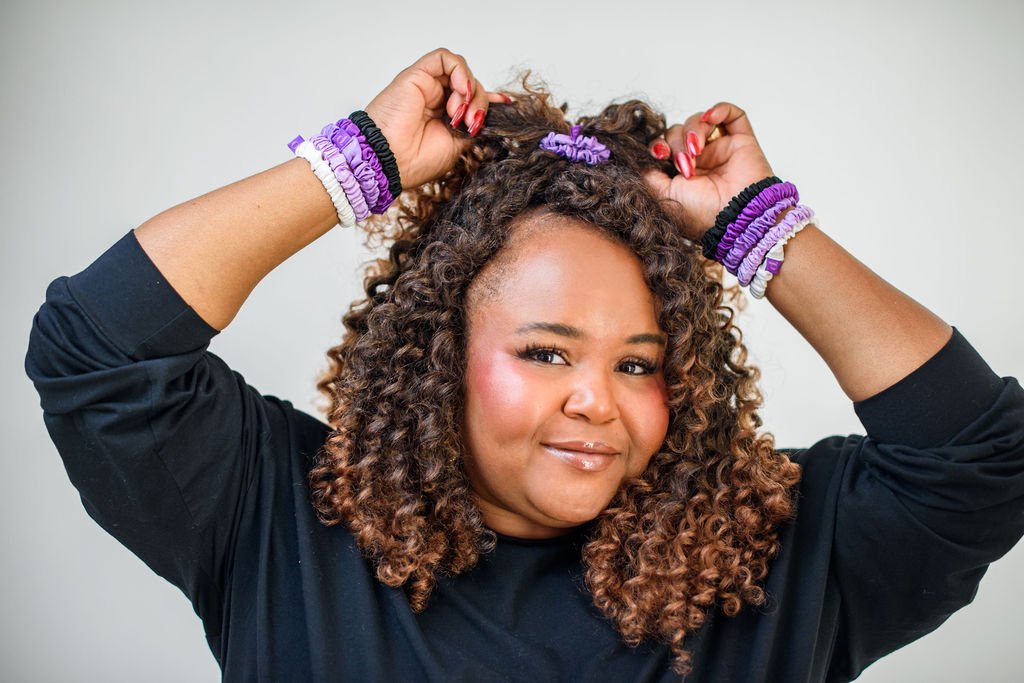
Step-by-step process of removing gentle ties to prevent hair breakage and visible creases in a ponytail
How Friction and Tension Damage Hair
Every strand has an outer layer of overlapping scales. Friction rubs those scales the wrong way, and tension stretches the strand until it snaps.
Two things make this worse:
- Rough materials like exposed elastic grab and tear at the hair cuticle
- Tight wrapping concentrates all the pressure on one thin section
- Metal joiners on cheap ties catch and cut strands
- Repeated placement in the same spot creates a weak point
Signs Your Hair Ties Are Causing Damage
Your hair tells you when a tie is too harsh. Watch for:
- A visible dent or crease that stays after you remove the tie
- More shedding than usual when you take your hair down
- Split ends that cluster around ponytail height
- A sore or tender scalp at the tie line
- Broken strands two to three inches long
Best Materials for Hair Ties: What to Look For
The best materials for hair ties are smooth, tightly woven fabrics that let strands slide instead of grip. Silk, modal, and long-staple cotton lead the list because their fiber surfaces have low friction against the hair cuticle. Composition matters more than color or brand: a smooth weave protects the cuticle, a rough one strips it.
Fiber-Level Differences That Determine Gentleness
Not all "soft" fabrics are gentle. Fiber structure decides how a tie behaves against hair:
- Mulberry silk (6A grade): The smoothest natural fiber, with a protein structure similar to hair. It creates the least friction but has almost no natural stretch, so it must be blended with a small amount of elastic to hold. Best for fine or fragile hair.
- Modal (beechwood pulp): A semi-synthetic cellulose fiber that is 50% more absorbent than cotton and resists shrinkage. Its smooth surface and moderate stretch make it the most versatile gentle option for medium to thick hair.
- Long-staple cotton (Pima or Supima): Longer fibers mean fewer exposed ends, so the surface stays smooth after repeated washing. It holds firmly but absorbs water, which can feel heavy on damp hair.
- Bamboo viscose: Soft and breathable, but lower wet strength than modal. It can pill over time if washed roughly.
- Bare elastic: High friction and no moisture management. It grabs hair and concentrates tension at the wrap point.
Weave, Width, and Elasticity: The Numbers That Matter
A tie's gentleness comes from three measurable construction details:
- Fabric weight (GSM): Gentle ties typically fall between 180 and 240 GSM. Lighter than 180 GSM feels flimsy and slips; heavier than 240 GSM can feel bulky and press into the scalp.
- Weave structure: A tight satin or twill weave (warp and weft threads interlaced closely) creates a smooth surface. A loose knit or nubby weave exposes fiber ends that catch the cuticle.
- Elastic recovery: Look for a tie that returns to at least 90% of its original length after stretching. Poor recovery means the band loosens, you wrap it more times, and tension increases.
A flat, sewn closure sits against hair without a hard bump. A glued or metal closure creates a pressure point that can cut strands. Run your finger along the seam before you buy.
How to Test a Tie Before You Commit
You can evaluate a tie in seconds:
- The finger test: Wrap the tie around two fingers and pull gently. A hard lump or rough edge will press into your hair all day.
- The slide test: Run the fabric across the back of your hand. If it drags or snags, it will do the same to your hair.
- The recovery test: Stretch the tie to twice its length, release, and check whether it snaps back flat. A wavy or stretched band will need extra wraps.
The Gentle-and-Durable Intersection
Most guides treat gentle and durable as opposites. They are not. A well-constructed modal or silk-blend tie holds firmly through a workout without the friction that causes breakage. Low-friction fiber, tight weave, and moderate elastic recovery combine to keep a tie put without pulling.
How to Prevent Ponytail Damage: Step-by-Step
You can prevent most ponytail damage with a few small changes to how you tie your hair. These steps take under a minute and work for any hair type.
Step 1: Match the Tie to Your Hair Texture
Texture compatibility is the foundation. Fine hair needs a light, smooth tie. Thick hair needs more hold without extra tension.
- Fine hair: choose silk or modal, and avoid tight elastics
- Thick hair: choose a firm cotton or modal blend with good stretch
- Curly hair: choose smooth fabric that will not snag the curl pattern
- Straight hair: almost any gentle fabric works, so focus on hold
Step 2: Adjust Knot Tension and Placement
Knot tension should be snug, not tight, the tie should hold your hair up without pressing hard into the scalp.
Try this routine:
- Gather hair loosely with your hands, not a brush.
- Wrap the tie only as many times as needed to hold.
- Stop before the band feels tight against your head.
- Move the placement every day to avoid one weak spot.
- Slide the tie out gently instead of pulling it off.
Choosing Gentle Ties for Fine, Thick, and Curly Hair
One tie does not fit every head. The right pick depends on your hair's weight, texture, and how you wear it.
Pretties Scented Hair Ties | 100% →
- Fine hair: pick the lightest fabric you can find, and re-tie if it slips
- Thick hair: look for a wider band that spreads pressure across more hair
- Curly hair: avoid anything with a rough seam that can snag curls
- Layered hair: choose a medium-hold tie so shorter strands stay put
Durability and Care: Making Gentle Ties Last
Gentle ties last longer when you treat them like fine fabric, not rubber. A few care habits protect the tie and your hair while extending the materials' life.
How to Wash Gentle Ties Without Ruining Them
Hand washing is safest. Here is the routine:
- Fill a bowl with cool water (below 86°F) and a drop of mild liquid soap.
- Submerge the ties and gently squeeze the suds through the fabric. Do not scrub or wring.
- Rinse in cool water until no soap remains.
- Press the ties between a towel to remove excess water. Never twist or wring.
- Lay flat to air dry away from direct sunlight. Hanging them stretched over a hook will deform the elastic.
Skip the washing machine and dryer entirely. Agitation and heat break down elastic fibers, so the band loses recovery, needs more wraps, and puts more tension on your hair.
Storage That Preserves Shape and Gentleness
Storage affects performance:
- Keep them loose in a small pouch or divided case. Stretching them around a hook or doorknob permanently deforms the elastic.
- Avoid storing them in direct sunlight, which fades colors and weakens fibers.
- Rotate between several ties so each one has time to recover its shape between wears.
- For scented ties, store them in an airtight container to preserve the essential oil aroma. Most essential-oil-infused ties retain their scent for up to a year with proper storage.
When to Replace a Gentle Tie
Elasticity fades with use. Replace a tie when:
- It no longer returns to its original shape after stretching.
- The fabric feels rough or pilled.
- The seam or closure shows signs of separation.
- You need more wraps than before to get the same hold.
A stretched-out tie is less gentle, not just less effective, because extra wraps concentrate pressure on the hair.
Sustainability: Choosing Ties That Are Gentle on Hair and the Planet
Gentle ties can also be gentle on the environment. The materials softest on hair, modal, silk, and long-staple cotton, are often biodegradable and made with lower environmental impact than synthetics.
When evaluating a tie's sustainability, look for:
- Biodegradable fibers: Modal, silk, and cotton break down naturally, unlike synthetic rubber or polyester.
- Low-impact dyes: Hand-dyed or plant-based dyes reduce chemical runoff compared to conventional dyeing.
- Ethical production: Women-led or fair-trade manufacturing supports safe working conditions.
- Minimal packaging: Compostable or recycled packaging reduces waste.
Matching Ties to Your Outfit and Daily Routine
Hair ties are an accessory, so they should work with your look, not against it. Coordination is easier than it sounds.
Think about your day:
- Work: pick a neutral shade that blends with your hair or outfit
- Gym: choose a firm-hold tie that stays put through movement
- Evening: a soft color can act like a small finishing touch
- Travel: a compact set with a case keeps ties handy and untangled
Conclusion
Picking the right tie comes down to three things: smooth material, moderate tension, and a firm hold that does not pull. Get those right and you protect your hair while keeping your style.
Frequently Asked Questions
Do hair ties cause permanent hair breakage?
Hair ties can cause permanent breakage if they create repeated tension and friction at the same spot. Tight elastics and metal clasps are the biggest culprits. Switching to gentle ties made from silk, modal, or organic cotton reduces friction and distributes pressure evenly. Rotating tie placement and avoiding overnight wear also helps. If you notice thinning edges or mid-shaft splits, change your ties and styling habits before damage becomes permanent.
What materials are best for gentle hair ties?
The best materials for hair ties are silk, modal, and organic cotton. These fabrics have smooth surfaces that reduce friction and elasticity that holds without excessive tension. Silk and modal are especially gentle on fine or delicate hair. Cotton is breathable and works well for thick hair. Avoid rubber bands, metal clasps, and rough elastic blends that catch and snap strands.
How can I prevent ponytail dents and creases?
To prevent ponytail dents, use a soft fabric tie with a smooth surface and moderate stretch. Position the tie slightly lower or higher each day to avoid pressing the same spot. Remove the tie gently by sliding it down rather than pulling it off. If a dent forms, mist the area with water and let it air dry. Silk and modal ties leave the fewest marks.
Can essential oil-infused hair ties benefit hair health?
Essential oil-infused hair ties can support hair health indirectly by encouraging gentler styling habits and adding a sensory cue to relax. Scents like lavender may help you slow down and handle hair more carefully. The oils do not repair damage, but they can make the styling routine feel more intentional. Choose ties with natural essential oils rather than synthetic fragrance to avoid scalp irritation.