
Aromatherapy Benefits for Work Stress: A 2026 Guide
· Editorial Team

Table of Contents
- How Aromatherapy Benefits Work Stress: The Science in Brief
- Best Essential Oils for Focus and Stress
- Essential Oil Hair Accessories for Stress: A Discreet Office Tool
- How to Use Aromatherapy at Work: 5 Practical Steps
- What the Evidence Says About Aromatherapy and Workplace Stress
- Safety Guidelines for Using Essential Oils in the Office
- Frequently Asked Questions
Last Updated: September 13, 2026
How Aromatherapy Benefits Work Stress: The Science in Brief
Aromatherapy benefits come from the practice of using concentrated botanical extracts, known as essential oils, to influence mood and physical state through the sense of smell. At Pretties, we hear from customers who want to understand why a scent can shift a stressful afternoon, so here is the short version before we get into the practical steps.
The short answer: certain essential oils appear to support relaxation and mental clarity by acting on the parts of the brain tied to emotion and memory. Inhaled molecules travel through the olfactory system, the body's scent-detection network, and reach the limbic system, which governs emotional response and nervous system regulation.
The Olfactory Pathway and the Limbic System
The olfactory pathway is the route scent molecules take from the nose to the brain. Unlike other senses, smell bypasses the thalamus and connects directly to the limbic system, a set of structures that includes the amygdala and hippocampus.
That direct line helps explain why a familiar scent can calm you before you consciously register it. The limbic system also influences cortisol levels, the hormone tied to physiological stress. Inhaled aromatherapy is the method most studied for this effect, and it is the easiest to use at a desk.
The National Center for Complementary and Integrative Health overview of aromatherapy notes that research on essential oils is still developing, which is why the practical guidance below stays conservative.
Best Essential Oils for Focus and Stress
The best essential oils for focus and stress fall into two working groups: calming oils for anxiety management and stimulating oils for cognitive performance. Matching the scent to the task matters more than picking a single favorite.
Lavender: The Calming Standard
Lavender is the most studied oil for stress reduction, thanks to its anxiolytic properties. A common mistake is expecting it to sharpen focus; it works best when the goal is winding down, easing stress-related fatigue, or preparing for sleep quality at the end of a long day.
Inhalation aromatherapy with lavender is the method most office workers can adopt without disrupting anyone nearby.
Peppermint, Eucalyptus, and Spearmint: The Focus Blend
Peppermint, eucalyptus, and spearmint form a blend many people associate with alertness and clear thinking. The cooling, sharp quality of these botanical extracts tends to feel invigorating rather than sedating, which makes them a better fit for a mid-afternoon slump or a demanding meeting block.
Goal |
Best Oil Group |
When to Use |
Effect to Expect |
|---|---|---|---|
Calm and wind down |
Lavender |
Late afternoon, post-meeting |
Softer stress response |
Focus and alertness |
Peppermint, eucalyptus, spearmint |
Before deep work |
Feeling of clarity |
Mood enhancement |
Citrus or floral blends |
Low-energy stretches |
Lighter mood |
Essential Oil Hair Accessories for Stress: A Discreet Office Tool
Scented hair accessories are the quietest way to carry aromatherapy into a shared workspace. A tie infused with essential oils releases its aroma slowly through the day, so you get the benefit without a diffuser, a plug-in, or a scent that drifts into a colleague's cubicle.

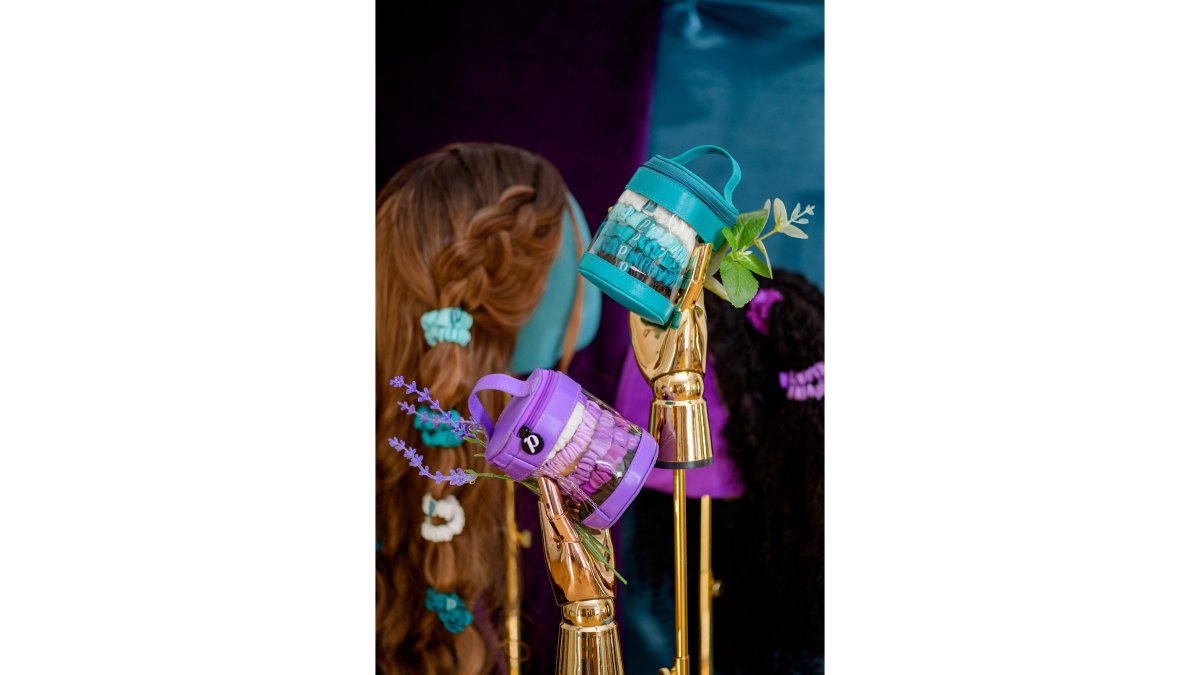
The Pretty Pretties makes microencapsulated hair ties from hand-dyed modal silk and cotton, and each one releases its aroma for up to a year. The U.S. Consumer Product Safety Commission guidance on consumer product safety is a useful reference for anyone checking how personal care accessories are regulated.
How to Use Aromatherapy at Work: 5 Practical Steps
Using aromatherapy at work comes down to five steps: choose your goal, pick the matching scent, keep the delivery method personal, time it to your schedule, and check in with how you feel after a week. The nuance most guides skip is that "calm" and "focus" are different jobs, and the oil that helps one can work against the other.
Step 1: Name the goal before you name the oil
Decide whether you want to downshift (calm before a hard conversation), upshift (alertness before deep work), or lift (mood during a low-energy stretch). These are three different targets, and they call for three different scent profiles.
Step 2: Match the scent to the task, not to a favorite
This is the gap most generic guides miss. Lavender is the most studied oil for calming, and it works best when the goal is winding down, easing stress-related fatigue, or preparing for sleep. Peppermint, eucalyptus, and spearmint lean invigorating rather than sedating, which makes them a better fit for a mid-afternoon slump or a demanding meeting block. Citrus and floral blends tend to read as mood-lifting rather than either calming or focusing.

Goal |
Scent Profile |
Best Timing |
What to Expect |
|---|---|---|---|
Downshift (calm) |
Lavender |
Late afternoon, post-meeting, before a difficult conversation |
Softer stress response, easier wind-down |
Upshift (focus) |
Peppermint, eucalyptus, spearmint |
Before deep work or a demanding meeting block |
Feeling of clarity and alertness |
Lift (mood) |
Citrus or floral blends |
Low-energy stretches |
Lighter mood, less flatness |
A common mistake is reaching for lavender before a focus block and wondering why it feels harder to concentrate. Match the profile to the job.
Step 3: Choose a personal delivery method
In a shared office, the delivery method matters as much as the oil. Personal inhalers and scented accessories keep the aroma close to you and out of shared air. Diffusers, plug-ins, and communal sprays push scent into everyone's breathing space, which is where fragrance sensitivity complaints start. If you want to use a diffuser at all, ask first and keep it in a private office, not a cubicle farm.
Step 4: Time it to your day
Scent works best as a cue, not a constant. Use a calming profile before a difficult conversation, a focus profile before deep work, and a mood-lifting profile during the mid-afternoon dip. A scent that runs all day stops reading as a signal and starts reading as background.
Step 5: Review after one week
Note which scent and timing actually changed how you felt, and drop what did not. Expectancy is real, so a week of honest self-observation tells you more than a single good or bad afternoon.
The gap most guides miss: folding aromatherapy into a workplace wellness program
If your employer runs a wellness program, ask whether personal aromatherapy tools can be included alongside existing stress-reduction resources. The pitch is simple: it is low-cost, it is personal rather than communal, and it gives employees an option that works at a desk without disrupting anyone nearby. Most programs already cover mindfulness apps, ergonomic assessments, and gym stipends; a personal scent tool fits the same category of low-friction, self-directed support. It costs the program nothing to add and gives employees one more lever they control.
What the Evidence Says About Aromatherapy and Workplace Stress
The evidence for aromatherapy and workplace stress is promising but uneven, and the unevenness matters more than the headline claims. Most clinical trials use small samples, short durations, and self-reported outcomes like the State-Trait Anxiety Inventory or a visual analog stress scale. That design makes it hard to separate the scent itself from the expectation of relief, the ritual of pausing, and the simple act of breathing more slowly for two minutes.
Here is what the research landscape actually looks like, in plain terms:
- Inhalation studies dominate. The most consistent findings come from inhaled lavender, not topical application or diffusers running all day. Inhaled molecules reach the limbic system within seconds, which is why a personal inhaler or a scented accessory can produce a felt shift faster than a topical product that has to absorb.
- Outcome measures are subjective. Most studies ask participants to rate anxiety, stress, or mood before and after. Fewer measure cortisol, heart rate variability, or blood pressure, and those physiological results are mixed.
- Blinding is nearly impossible. Participants know whether they smelled lavender or a control. That does not invalidate the effect, but it means expectancy is baked into almost every positive result.
- Workplace-specific trials are scarce. Most research happens in clinical, dental, or exam settings. The office is understudied, which is exactly why the practical guidance below stays conservative and personal rather than prescriptive.
The National Center for Complementary and Integrative Health overview of aromatherapy frames this well: aromatherapy is generally considered safe when used as directed, but the evidence base is still developing. Treat it as one supportive tool in a stack that also includes workload management, breaks, sleep, and honest conversations about capacity.
Safety Guidelines for Using Essential Oils in the Office
Safety guidelines matter more in a shared office than at home, because your scent becomes everyone's air. Keep application personal, use dilution ratios when applying oils to skin, and never add essential oils directly to a communal diffuser without asking.
- Dilute essential oils in carrier oils before any skin contact
- Skip topical use on broken or sensitive skin
- Ask before diffusing in shared spaces; fragrance sensitivity is common
- Keep oils away from eyes and away from pets
- Store bottles out of sunlight to protect the oils
If you have a medical condition or are pregnant, check with a healthcare provider first. The U.S. Food and Drug Administration information on essential oils and cosmetics explains how these products are classified and what labels can and cannot claim.
Work stress rarely has a single fix, and the calm you want at 3 p.m. usually comes from small, repeatable rituals rather than one big change. The Pretty Pretties builds hand-dyed, biodegradable hair ties infused with 100% essential oils, made by women-led teams with zero-waste production, so a moment of serenity or invigoration is always within reach. Choose the Lavender set for calm or the Uplift blend for clarity, and let a scent you wear carry the reset you need. Shop the Lavender set and make your next workday a little more intentional.
Frequently Asked Questions
Which essential oils are best for reducing work stress?
Lavender is the most studied for calming; peppermint, eucalyptus, and spearmint are better for focus. For work, try lavender when you need to unwind and mint blends when you need alertness. Personal inhalers or microencapsulated hair ties let you switch scents discreetly.
How does aromatherapy affect the brain to lower stress?
When you inhale, scent molecules travel to the olfactory system, which connects directly to the limbic system, the brain's emotional center. This triggers a nervous system regulation response that can lower cortisol and promote calm. The effect is partly physiological and partly psychological, based on expectancy and personal associations with the scent.
Can aromatherapy improve productivity in the workplace?
Some studies suggest that peppermint and eucalyptus can enhance cognitive performance, alertness, and memory. Using a focus-oriented scent during deep work can help you stay on task, while a calming scent can reduce stress-related fatigue that hampers productivity.
Are there safety concerns when using essential oils at work?
Yes. Some people are sensitive or allergic to certain oils, and strong scents can bother coworkers. Always dilute essential oils with carrier oils if applying to skin, and avoid diffusing in shared spaces without consent. For a discreet option, microencapsulated hair ties release a subtle aroma without affecting others. If pregnant or with a medical condition, consult a healthcare provider first.